


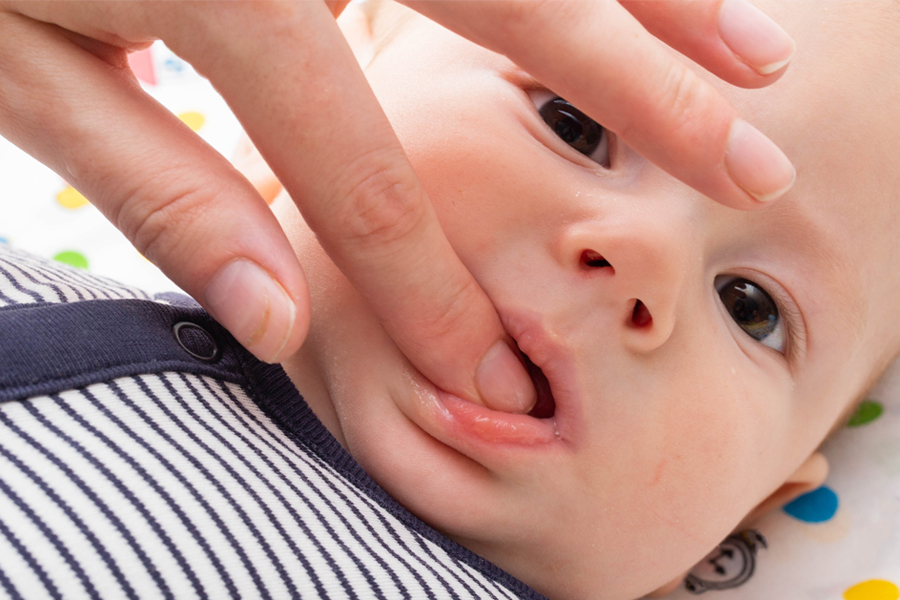
Ask a room full of parents what it was like to have a teething baby, and you’ll get a range of reactions, from “no big deal” to “don’t remind me.”
“Teething is very baby-dependent,” says UNC Health pediatrician Rebecca Chasnovitz, MD. “Some babies have no symptoms, get their teeth and it’s fine. Some babies are more sensitive and can be fussy when their teeth are coming in.”
Lots of things can make babies fussy, and sometimes parents attribute their baby’s woes to teething when it might have been something else.
“Most babies will handle this just fine,” Dr. Chasnovitz says. She offers five things parents should know.
-
Every baby gets teeth on their own timeline.
As with most things baby-related, it’s best to not compare your baby to someone else’s.
“We typically see a baby’s first tooth at 6 months old, but there’s a lot of variation between babies,” Dr. Chasnovitz says. “It could be earlier, could be later. By 2 ½ to 3 years, most of the teeth are in.”
The first teeth to come in are usually the lower front teeth followed by the upper front teeth.
Drooling and chewing is normal development and does not mean a tooth is on the way.
“At 4 months old, babies are better able to use their hands and bring their fists to their mouth,” Dr. Chasnovitz says. “The part that’s most developed, sense-wise, is their mouth, because they’ve been spending so much time feeding, so they’re bringing things there to explore them.”
-
Teething symptoms are generally mild.
Teething can cause some pain and discomfort when the tooth is coming out of the gum. As a result, your baby may be fussy, irritable or have brief trouble sleeping or eating. Sometimes, there can be some bleeding or ulcers at the spot where the tooth comes in, but this might hurt you as the parent more than it hurts your baby.
“Babies aren’t always bothered by it,” Dr. Chasnovitz says.
This pain and discomfort shouldn’t linger or cause fever, rash or gastrointestinal distress.
“If it’s been more than a bad night or two, that’s out of the normal and you should see your doctor,” Dr. Chasnovitz says. “Teething doesn’t usually do that, so if they’ve been inconsolable for hours, they haven’t slept or they’ve missed two feeds because they can’t calm down, they should see their doctor.”
Rather than teething, your baby might have a viral or bacterial infection (thanks to their new habit of bringing everything to their mouth), an ear infection or a digestive issue.
-
You can ease your baby’s teething pain.
There’s no shortage of teething toys available for sale, and if your baby has one they love, that’s great, but don’t feel like you need to buy anything extra for this process.
“You can put a clean, wet washcloth in the freezer,” Dr. Chasnovitz says. “The cold will be soothing, and so will the act of chewing and sucking on it.”
Don’t put anything that’s frozen solid in your baby’s mouth; the cold can hurt the delicate skin in their mouths and some items are choking hazards.
If you do buy teethers, avoid anything filled with liquid or gel, which can break down and leak over time. Put ice or frozen fruit in silicone or mesh feeders sold for this purpose, and make sure there’s a non-frozen part your baby can hold comfortably.
Avoid teething necklaces, which are a strangulation risk.
If your baby is fussy, ask their doctor if it’s OK to give them a dose of acetaminophen.
“I don’t recommend it more than one or two nights in a row,” Dr. Chasnovitz says. “If they’re still fussy after that, then it may not be pain from teething that’s bothering them. You shouldn’t need it for teething every night.”
Some remedies that your parents or grandparents may have used are no longer recommended.
“No whiskey on your baby’s gums, and nothing herbal,” Dr. Chasnovitz says. “There are old teething gels still on shelves that contain lidocaine, which is a numbing agent, but we don’t recommend them anymore because if you swallow enough lidocaine, it numbs the throat and the reflexes there, which can cause choking.”
-
Teething can cause breastfeeding challenges.
It may have taken you some time to figure out breastfeeding. New teeth can complicate things.
Your baby may bite or accidentally clamp down on your breast or nipple for a variety of reasons. They may not be latched securely, or they might get distracted, particularly near the end of a feed. Accidental bites can happen when your baby has a stuffy nose or falls asleep during feeding. Babies may bite when they want your attention or if they’re trying to adjust to changes in the flow of milk.
“Don’t tolerate the bite,” Dr. Chasnovitz says. “Unlatch and say something like, ‘Ow, don’t bite,’ and then put the baby back on. If you take the baby off the breast every time they bite, the baby will get the hint, or it may be a natural time to stop breastfeeding.”
Try to stay calm when removing your baby; if you yelp in pain, you could startle them. If you need additional advice about breastfeeding as your baby gets more teeth, talk to your pediatrician or a lactation consultant.
-
A new tooth means it’s time to start thinking about dental care.
Once your baby has any teeth, it’s time to start caring for them.
“It’s never too early to brush teeth,” Dr. Chasnovitz says, acknowledging that this task isn’t always easy with a baby. “Try to brush the very first tooth at least once a day with a toothpaste with fluoride. Fluoride is very important to preventing cavities. Since a baby can’t swish and spit, use a tiny smear, about the size of a grain of rice.”
Even though baby teeth will eventually fall out, it’s still important to try to prevent early cavities as much as possible. Baby teeth help your child learn to speak and get the nutrition they need to grow, and they serve as important placeholders for adult teeth. Cavities and tooth decay could mean they’d have to be prematurely removed, affecting the spacing and health of adult teeth. Brushing regularly helps your child build this lifelong practice.
Be mindful about how your child’s diet affects their teeth as they start to eat more. Try to give sticky snacks, like gummies, dried fruit, raisins and granola bars, at a time when you can brush teeth soon after. When your baby is 1 year old, it’s time to transition from bottles to cups.
“Bottles wash the teeth in milk, and then it sits on the teeth longer than it does when you drink from a cup,” Dr. Chasnovitz says. “Don’t send your baby to bed with a bottle that they drink from all night—that’s a high risk factor for cavities.”
You’ll also need to start looking for your child’s first dentist.
“We recommend the first dental visit between 1 and 2 years old,” Dr. Chasnovitz says. “That first dental visit is quick, with a lot of education, but they will start to look for early signs of cavities.”
If you’re concerned about your baby’s teeth, talk to their doctor. If you need a doctor, find one near you.