


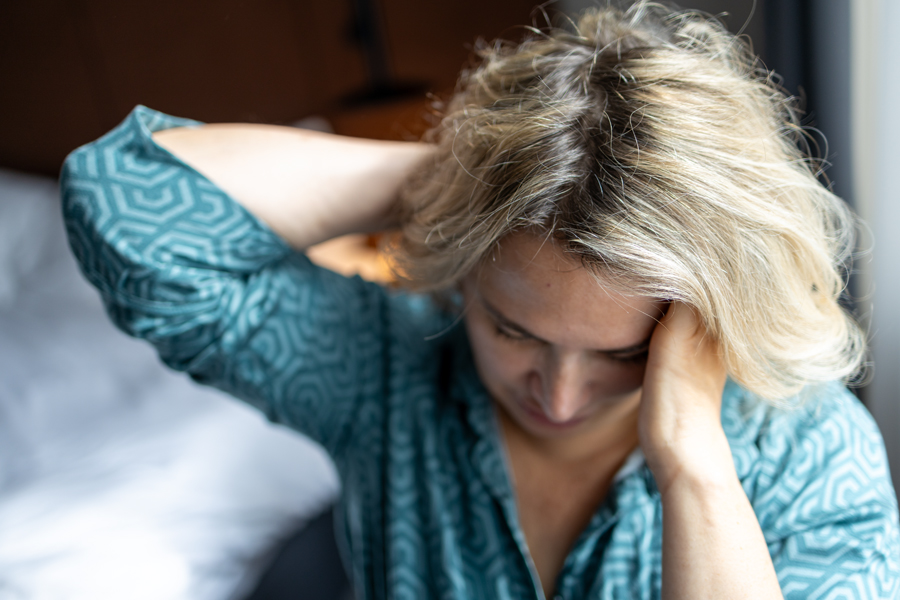
Women are speaking more openly about perimenopause and menopause and the symptoms they experience, from hot flashes and night sweats to difficulty sleeping and changes in libido.
And those are just the tip of the iceberg: Changes in estrogen levels can cause dozens of symptoms, from head to toe.
“Hormones are in every cell of our body, so everything can be affected by changes in estrogen,” says UNC Health family nurse practitioner Jennifer Fay. “We’ll probably never know why some women sail through this transition and why some have so many symptoms they feel they can’t function.”
Menopause is defined as going one year without a period. Symptoms can start as early as 15 years before that point (though they tend to get worse in the last few years before menopause), and they can extend for as long afterward. It’s hard to tell what changes during your 40s and 50s are related to menopause, but your provider can help.
“We don’t want to blame hormones for everything or assume something is related to menopause just because you’re in midlife,” Fay says. “It’s still important to do a thorough history and make sure there’s nothing else that needs to be addressed.”
Here are a few of the lesser-known symptoms of perimenopause and menopause.
-
Feeling “off.”
As you age, you learn more about yourself, your moods and how you tend to feel in different situations. Fluctuating hormone levels can change all of that.
“One of the common things I hear is, ‘I don’t feel like myself,’” Fay says. “That’s a difficult symptom, because it’s different for every person and can take a while to recognize.”
You may feel more irritability, anger, sadness and anxiety, or you may be shocked by how fast you swing from emotion to another, even in familiar situations. Any time you have persistent mood-related symptoms, especially symptoms of depression, talk to your provider.
Hormonal shifts, especially when combined with difficulty sleeping, can affect concentration and memory.
“A lot of women have brain fog and feel like they lose their train of thought more often,” Fay says.
-
Joint pain.
Estrogen plays a role in keeping your joints lubricated; when estrogen declines, so do levels of the synovial fluid that cushions your knees, hips, shoulders and other joints. With less fluid, there’s increased friction and dryness at the joint, causing pain.
“For some, joint pain may be due to a past injury or structural issue, but if you’re suddenly having aches and pains you don’t typically have, it’s probably hormonal,” Fay says.
This hormone shift is why women are slightly more likely than men to experience frozen shoulder, a condition where you suddenly can’t raise your arm.
-
Skin itchiness.
Declining estrogen doesn’t just affect the fluid around your joints; it can affect water retention throughout your entire body.
“The lack of estrogen causes less water retention in your tissues, which means that skin will be drier,” Fay says. “For some, that leads to a crawling feeling in the skin.”
That dryness can also make your skin feel more itchy; itchy ears are a common complaint, according to Fay.
Some skin changes are due to normal aging, but it may be that hormonal shifts in combination with aging worsen how your skin feels to you.
“Everyone will lose some collagen as they age, which causes a loss of suppleness in the skin,” Fay says. “With itchiness, it’s still important to rule out different causes before you assume it’s related to menopause. With an itchy ear, you could have an ear infection or some fungus.”
-
Dry eyes and mouth.
More places where you might feel dry: your eyes and your mouth. You may notice that your eyes feel dry, gritty or like they’re burning. You may find yourself with a dry mouth or have trouble swallowing.
Again, talk to your healthcare provider, because dry eyes and dry mouth can be symptoms of Sjogren’s disease, an autoimmune disorder that is most commonly diagnosed in women in their late 40s. Fortunately, there are a lot of easy hacks that can help these particular symptoms.
“Focus on hydration, because very few of us drink enough water,” Fay says. “For some people over-the-counter eye drops work well to lubricate their eyes, and for the mouth, special mouthwash or toothpaste designed for dry mouth can help. Sucking on sour candies can also increase saliva production.”
-
Heart palpitations.
If you’ve never had any issue with your heart, it can be frightening to suddenly feel your heart pounding, skipping, racing or fluttering, but you may experience heart palpitations during perimenopause or after menopause.
“It’s not that something is necessarily changing with your cardiovascular health,” Fay says. “It could just be the body’s response to changing estrogen.”
Still, this is a time when it’s important to see your healthcare provider to be sure that something else isn’t going on. Women are at higher risk of heart disease after menopause, and you’ll want to take all necessary steps to keep your heart strong and working well as you age.
-
Digestive issues.
Do you notice that you’re suddenly experiencing more bloating, gas, constipation or heartburn? You guessed it: Changing estrogen levels are to blame.
Again, it’s important to talk to your primary care provider about changes in your bowel habits or increased bloating, because those are often the first signs of colorectal cancer.
Then, consider your diet.
“Changing your diet is hard, but a lot of people are eating a lot of ultraprocessed food, which ruins their gut microbiomes,” Fay says. “Focusing on fruits and vegetables, whole grains and lean meats can make a difference.”
What to Do If You’re Experiencing Menopause Symptoms
Some menopause symptoms can be categorized as minor nuisances; others affect your quality of life. Talk to your healthcare provider about your symptoms and how they affect you.
Menopause hormone therapy has been shown to reduce the symptoms of hot flashes and night sweats in multiple research studies, but its effectiveness in reducing some of these other symptoms is, as of now, only anecdotal.
“Someone usually starts hormone therapy for a variety of reasons, but once a person has been on hormones for a while, they’ll report that their joints are feeling better or their dryness has improved,” Fay says.
If you’re experiencing new symptoms, Fay recommends tracking them to share that information with your provider.
“I know that’s hard when you’re a mom or you’re working, so I hate to put another task on your plate, but it is really helpful to show your provider what you’re noticing, for what amount of time and whether it’s generally happening the same time each month,” Fay says. “It can take a while to tune in with your body and recognize what might be hormonal.”
There’s no test for perimenopause because hormone levels fluctuate, so your provider depends on this kind of data to determine your next best step. It’s also important to know that if you want to pursue hormone therapy, it might take some time to feel better.
During perimenopause, you may have vastly different amounts of estrogen from month to month; after menopause, hormone therapy becomes more predictable and consistent, because your ovaries have stopped producing estrogen in large amounts.
“There’s no perfect dose for hormone therapy during perimenopause,” Fay says. “You might find a dose that works OK for a few months, and then you have to adjust. It can really be a roller coaster.”
If you’re experiencing symptoms related to menopause, talk to your provider or find one near you.