


This article originally ran on October 7, 2019, and was updated on July 1, 2026.
If you’re the parent of a small child, you’re probably used to your kid having cold symptoms such as runny nose, cough and sore throat. Kids can have as many as 10 colds a year, and there’s also the flu, RSV and COVID-19.
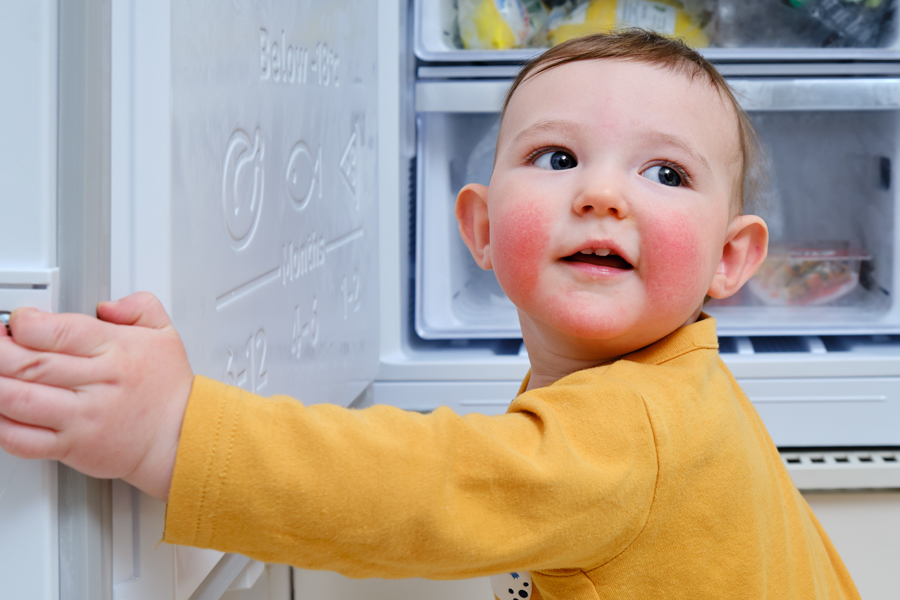
But if your child has cold symptoms along with a red rash on their face that looks like they’ve been slapped or spent time outside in the cold, you might be dealing with fifth disease.
This infection, more properly known as erythema infectiosum, is called fifth disease because it was historically listed fifth on a list of six childhood diseases that cause a rash (the first four are measles, scarlet fever, rubella and Dukes’ disease). It’s caused by a virus called parvovirus B19 and spread through respiratory droplets.
It’s never easy to see your child sick, but for most kids, this is a mild illness that they’ll typically have only once, as the virus confers lifelong immunity.
UNC Health pediatrician Amber Beg, MD, explains what you can expect.
Symptoms of Fifth Disease
You may have had fifth disease and never known it; about 1 in 4 people infected with parvovirus B19 experience no symptoms. You may realize it’s a parvovirus B19 infection only if you or your child is tested at your doctor’s office or urgent care. Both children and adults can become infected with this virus, though most people are exposed between the ages of 5 and 15.
At first, fifth disease will look like a cold or the flu, with fever, headache, cough, sneezing and body aches lasting for two to five days. Adults have the same symptoms plus joint pain, which is less common in kids.
“After that is typically when you see the bright red rash on the cheeks, which looks like slapped cheeks or a sunburn,” Dr. Beg says. “The rash typically lasts five to 10 days, which can worry some parents, but it usually doesn’t hurt or bother the child.”
By the time you see the rash, your child is no longer contagious and can’t spread parvovirus B19, so they can typically go to school.
Sometimes, children get a second, separate rash that starts on the trunk of their body and spreads to the limbs. This one tends to look like lace, rather than bumpy.
If you’re concerned about a rash on your child’s body, talk to their doctor; they’ll be able to distinguish between a rash caused by fifth disease and one that’s caused by something else.
Given recent measles outbreaks, you may be especially concerned, but with measles, children have much more severe symptoms, other symptoms are usually present at the same time as the rash and the rash is different.
“The rash associated with measles tends to start at the head and move down the body, and it has flat red marks and bumps,” Dr. Beg says. “There are no bumps with fifth disease, just flat red marks.”
Adults are less likely to get rashes.
Treatment of Fifth Disease
You can treat the symptoms of fifth disease the same way you’d treat any child’s cold—with acetaminophen or ibuprofen for fever and pain, nasal saline and a bulb syringe to pull out mucus, rest and lots of fluids.
“With any virus, you want to make sure your child is staying well-hydrated,” Dr. Beg says. “If a baby or child is going eight or more hours without a wet diaper, that’s a red flag.”
There is no treatment for the rash. You just have to wait it out.
Children who are otherwise healthy tend to recover from fifth disease easily and typically don’t require a visit to the doctor, but if your child is immunocompromised or has a blood disorder, you’ll want to be more cautious.
“It’s rare, but fifth disease can cause the bone marrow to stop making red blood cells and cause anemia,” Dr. Beg says. “We don’t see it too often, but we worry about any infection when a child is immunocompromised.”
Similarly, most adults are able to treat their symptoms of fifth disease at home, but immunocompromised people and people with blood disorders are at higher risk of anemia.
Pregnant women should contact their doctor if they believe they have been exposed to fifth disease (you may only realize when your child’s rash shows up). While it is rare, fifth disease can cause anemia in the fetus and increase the risk of miscarriage. Your doctor may order blood work to see if you have antibodies against the infection or additional tests to check on your baby.
There’s no vaccine for parvovirus B19 and you may not be able to prevent an infection, but it always helps to make sure everyone in the family gets good sleep, which boosts immune systems, and covers their coughs and sneezes. Disinfect high-touch surfaces and remind everyone to wash their hands.
“Good hand-washing is always important,” Dr. Beg says.
If you’re concerned about your child’s health, talk to their doctor. If you need a doctor, find one near you.