


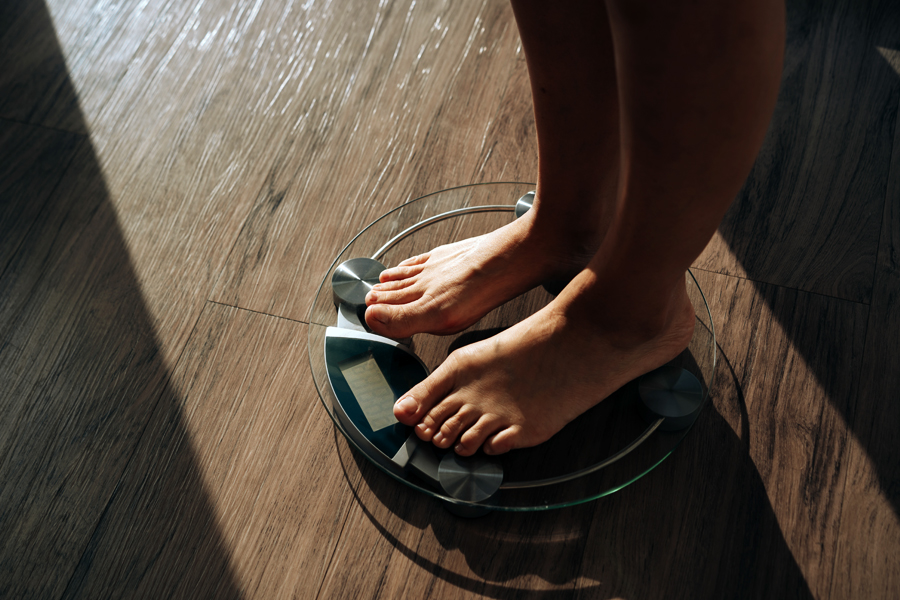
By now, you’ve likely seen and heard many stories about people having a remarkable response to a glucagon-like peptide-1 receptor agonist, or a GLP-1 drug. After learning of a neighbor who lost 50 pounds or a friend who no longer has an appetite for sweets or alcohol, you might be eager to try one of these weight loss medications for yourself.
So you do, but after a few weeks or even a few months, you don’t feel much different and the scale isn’t moving. We asked UNC Health endocrinologist Michael Porter, DO, why you may not be losing as much weight as you hoped and what to do about it.
1. Your expectations are too high.
As researchers continue to study GLP-1s, there have been countless stories about the many potential benefits of these medications. If you’ve seen those headlines and then heard about a friend’s extraordinary weight loss, you might start to feel that GLP-1s are miracle drugs. That can affect your own expectations when you take one.
“These medications provide an average weight loss of 15 to 20 percent according to studies,” Dr. Porter says. “There are going to be people who fall below that average.”
If you’re trying a GLP-1, it’s important to manage your expectations.
“Losing 20 percent of your weight leads to significant changes in health, but when people see all these headlines, they sometimes expect to lose far beyond that and are disappointed,” Dr. Porter says.
2. You’re not at the maximum dose yet.
After years of struggling with your weight, you might be ready to see immediate results, especially if that’s what someone you know experienced. Remember that you’ll start at a low dose of these medications and that the dose will be adjusted over time. Semaglutide (brand names Ozempic and Wegovy) typically has five dosing levels and tirzepatide (brand names Mounjaro and Zepbound) typically has six.
“The fastest we move is a month at a time, so it takes five to six months to be at the full dose,” Dr. Porter says. “We often see weight loss before that, but I tell people not to worry until about four to six months, when we’re approaching the most effective dose.”
If you’re having a lot of side effects from the medication, which can include nausea and vomiting, diarrhea, constipation or abdominal pain, you’ll move at a much slower pace; for some people, it can take closer to a year to reach the full dose.
Whether you have side effects doesn’t predict how you’ll respond to these medications.
“Some people think that the only way they’ll achieve their goals is to not feel well or to experience all these side effects, but some people have very dramatic weight loss with very few side effects, to the point that they ask if they’re even on something,” Dr. Porter says. “For some, these medications can have a really subtle effect on appetite and still lead to weight loss in time.”
3. You’re not addressing other lifestyle factors.
You may have heard someone say they felt like they didn’t even have to try to lose weight on a GLP-1, but you still have to start or maintain other healthy habits.
“Healthy lifestyle changes remain important when taking these medications,” Dr. Porter says. “We do check in with diet and exercise, regardless of your medication plan. You might need to get plugged in with a dietitian to make sure you have good nutrition.”
And while you might be used to talking with your doctor about diet and exercise, remember that other healthy habits support your weight loss goals.
“Sleep and stress management are often the overlooked part of lifestyle modifications,” Dr. Porter says.
If you’re struggling to consistently get a good night’s sleep or handle ongoing stressors, talk to your primary care provider about strategies that can help.
4. You’re on another medication or have a medical condition that slows weight loss.
If you’re on a medication that has weight gain as a side effect, that will likely affect your response to a GLP-1. Steroids, antidepressants, antipsychotics and anti-seizure medications are just a few of the medications that could slow weight loss.
“It doesn’t mean you can’t have success, but it might mean you move a little slower,” Dr. Porter says.
Don’t stop taking any medication without talking to your healthcare provider.
Losing weight on a GLP-1 can make it easier to exercise and be active, but at the beginning, “if someone is significantly limited in mobility, they might have a slower than expected response,” Dr. Porter says.
If you’ve been at a maximum dose for a few months and are not seeing expected results, your doctor may consider whether you should be screened for other medical conditions.
“We might look for some of the rarer causes of obesity, like hormonal disorders or a genetic issue,” Dr. Porter says.
5. You’re only thinking about the scale.
While fitting into an old pair of jeans is a great boost for your self-esteem, remember that the number on the scale is not the only—or even the best—indicator of your health.
“These medications improve so many other metrics that you might be healthier overall even without significant weight loss,” Dr. Porter says. “People with diabetes often have less weight loss than people who don’t, but that doesn’t mean they’re not having dramatic improvements in their glucose control.”
Even if your weight stays the same, your blood sugar, blood pressure and cholesterol readings may be improving, which helps to decrease your risk for heart attack and stroke. You may be sleeping better at night and starting to move more.
“These other metrics are often overlooked, and the number of pounds lost is not the only way to define getting healthier or whether someone’s quality of life has improved,” Dr. Porter says.
6. You’re a nonresponder.
Between 10 and 15 percent of people taking GLP-1s are considered nonresponders, meaning that they lose less than 5 percent of their starting weight on the maximum tolerated dose.
“Some people do everything they can from a lifestyle modification approach and they don’t respond,” Dr. Porter says. “That’s not your fault. This is a complicated disease. We’ve still only scratched the surface of why people have challenges with their weight or with these medications.”
Researchers are still working on why some people don’t respond; there may be a specific genetic component or an issue with hormone receptors.
That said, there are still options to manage your weight. Dr. Porter says some people have more success when they switch to a different GLP-1. If other medications don’t work, nonresponders may be good candidates for weight loss surgery.
There are also more options on the way, Dr. Porter says, so don’t lose hope.
“There are many other versions of medications that will help with this disease in the pipeline that will likely be approved in the coming years,” he says. “Just because something doesn’t work for you now, that doesn’t mean there won’t be something to help you in the future.”
If you have questions about weight loss, talk to your doctor. If you need a doctor, find one near you.