


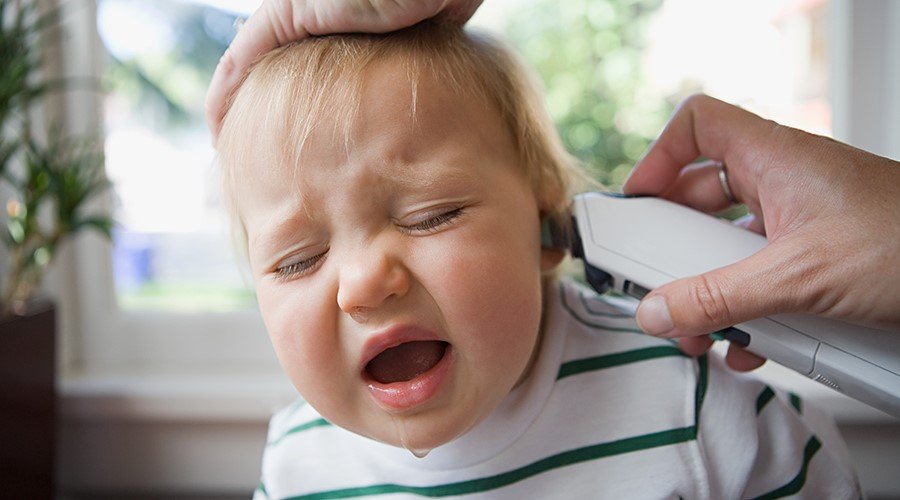
Cold and flu season is hard when you’re the parent of a young child, because children can have as many as 10 colds in a year. But this time of year can be especially difficult when a respiratory infection is followed by an ear infection.
Approximately 80 percent of children will have an ear infection at some point, usually between the ages of 6 months and 24 months. UNC Health pediatrician Aubrey Barker, MD, explains what parents need to know to help their child feel better.
What is an ear infection, and why do children get so many?
An ear infection—known formally as acute otitis media—happens in the middle ear, which contains small bones vital for hearing. The middle ear is typically filled with air, which allows it to transfer sounds from your outer to your inner ear. The eustachian tube, which connects the middle ear to the back of the nose and the throat, regulates the air pressure in the middle ear and drains fluid as needed.
When the eustachian tube gets blocked—by all the mucus of a cold, for example—fluid can build up in the middle ear, which then becomes a breeding ground for bacteria to grow and cause an infection.
“There will be bulging and pus behind the ear drum, which we can see on exam with an otoscope,” Dr. Barker says, noting that it is not visible from the outside and that parents shouldn’t put anything in their child’s ear to look for signs of an infection.
While ear infections can happen at any age, they are more common in children.
“Kids are getting more viral upper respiratory infections, so they’re more likely to have these back-to-back infections than adults,” Dr. Barker says. “Their eustachian tubes are also smaller and shallower, so they don’t drain as well. They tend to back up a little more.”
As your child grows, their eustachian tubes will too, which is why ear infections typically become less common with age.
What are the symptoms of an ear infection?
Because ear infections tend to happen in children under the age of 2, your child may not be able to tell you their ear hurts.
“The most obvious symptom is pulling at the ear, but kids don’t always make it that easy for us,” Dr. Barker says. “If your child had viral symptoms and got better and then is fussy again, that can be a sign. They may have a new fever, but not always. They’ll have a hard time sleeping or may eat less than usual.”
An ear infection typically starts a few days or a week after symptoms of a viral infection, though that timeline can vary, Dr. Barker says, and some of these symptoms can be hard to distinguish from a second (or third) cold. If you have concerns, contact your child’s doctor.
How are ear infections treated?
Treatment for an ear infection usually depends on the age of your child and the severity of their symptoms.
“If a child is younger than 2 years old, we always treat with a course of antibiotics for 10 days,” Dr. Barker says. “If they’re older than 2, we might watch and wait and see if it goes away on its own.”
Because ear infections are common, Dr. Barker says that a child’s doctor might find an ear infection on a regular exam of a child. If the child is older than 2 and feels fine otherwise, they may not need antibiotics to clear the infection as their immune system is more developed.
“When they’re older than 2, we’ll consider how much the kid is bothered and in pain,” Dr. Barker says. “They may be OK with Tylenol or Motrin (ibuprofen), or a shorter course of antibiotics.”
Don’t put anything in your child’s ear without consulting their doctor. Because ear infections affect the middle ear, cleaning their ear with hydrogen peroxide or any other liquid won’t help.
If a child has multiple ear infections (typically, three or four in six months or five or six in a year), needs multiple rounds of antibiotics to clear an infection or has an anatomical issue in the ear, your doctor may recommend a consult with an ear, nose and throat doctor about ear tube surgery.
“The tubes will help the fluid drain more easily and make it easier to treat an infection because we can use prescription antibiotic ear drops rather than oral antibiotics,” Dr. Barker says. “With so many ear infections, we would start to worry about decreased hearing because of fluid causing damage to the ear membranes.”
Other complications of ear infections are rare but can include ruptured ear drums, mastoiditis (an infection of the bone behind the ear) or meningitis (inflammation of the tissues around the brain).
Can you prevent an ear infection?
Because ear infections are typically the result of another infection, prevention starts with reducing your child’s risk of viral and bacterial infections, which includes staying up-to-date with immunizations.
“One of the huge benefits of vaccines is a lower risk of ear infections,” Dr. Barker says. “There was a pretty large drop in ear infections when the pneumococcal vaccines were introduced.”
Flu shots are recommended for everyone over 6 months old and can help reduce your child’s risk of illness and a subsequent ear infection.
There is some evidence that breastfeeding can help to prevent ear infections, thanks to the benefits breast milk provides to a baby’s immune system as well as the position the baby is in when they nurse, but it will not completely prevent ear infections.
Even with immunizations and your best attempts to help a child maintain good hand hygiene, your child will get respiratory viruses. When they do, you can work to prevent an ear infection by clearing out mucus as much as possible. Babies, toddlers and preschoolers are not supposed to take cold and cough medicine, but other methods are effective.
“Saline nasal spray, which you can use multiple times a day, can flush out congestion in the nose, decreasing the rate of ear infections,” Dr. Barker says. “A nasal aspirator, which sucks mucus out of the nose, can also help, and so can humidifiers.”
Worried your child may have an ear infection? Talk to your doctor. If you need a doctor, find one near you.