
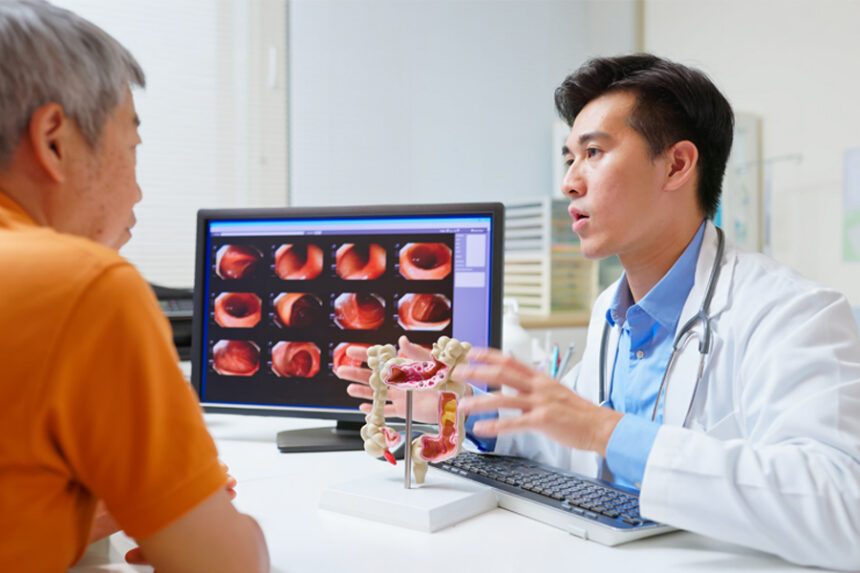
Let’s admit it: It’s a lot of work to prepare for your colonoscopy. You have to take time off work, find someone to drive you to and from the appointment, and you’ll spend a significant amount of time on the toilet, clearing everything out of your digestive system.
But if you do that work, the procedure itself is quick and easy, and the benefits are huge—it could save your life.
“A colonoscopy is the most effective way to prevent colorectal cancer,” says UNC Health gastroenterologist Alicia Muratore, MD. “There are other tests available that can detect colorectal cancer, such as at-home stool tests, but a colonoscopy is the only one that will find and remove precancerous polyps, stopping cancer before it even starts.”
Maybe you’re nervous about the sensitive nature of the exam.
“People worry about this being embarrassing, but it’s what we do all day, every day,” Dr. Muratore says. “This is a routine procedure that can be lifesaving. Don’t miss getting a diagnosis or a polyp removal because of embarrassment.”
Dr. Muratore walks us step-by-step through getting a colonoscopy, so you know what to expect.
Scheduling Your Colonoscopy
The U.S. Preventive Services Task Force and the American Cancer Society recommends that all adults begin screenings for colorectal cancer at the age of 45.
“Even if you feel well, symptoms of colorectal cancer don’t typically appear until the cancer has advanced. We’re trying to stay ahead of that,” Dr. Muratore says.
Your primary care provider may recommend that you get a colonoscopy before the age of 45 if you have a family history of colorectal cancer or precancerous polyps or if you experience blood in your stool or a change in your bowel habits. In addition to colorectal cancer, a colonoscopy also can help your doctor diagnose irritable bowel disease, including Crohn’s disease and ulcerative colitis, diverticulosis, ischemic colitis and bowel obstructions.
If you’re 45 and don’t have any symptoms, you may not need to have an appointment with your colonoscopy provider before the procedure. Many clinics allow people to go through an online screening, schedule their colonoscopy and receive their bowel prep instructions online or by phone.
“We typically meet you day-of, but we’re always happy to have a clinic visit beforehand if you have questions and that would make you more comfortable,” Dr. Muratore says.
Preparing for Your Colonoscopy
Here comes the most challenging part: bowel prep, or emptying your colon of all stool so that your doctor can see every nook and cranny of your colon clearly.
The day before your colonoscopy, you’ll follow a clear, liquid diet; your doctor’s office will give you a list of foods that you can and can’t eat. They’ll also provide specific instructions about which of your medications you can continue to take and which to pause.
In the evening, you’ll start taking a bowel prep, which will make you poop. There are multiple types of bowel prep kits, from liquid-only preps to pills that you take with lots of water. Follow the instructions associated with your particular kit. Typically, you will do split dosing, which means you complete half the prep the evening before and half the morning of your colonoscopy.
Split dosing tends to make the process a lot easier, Dr. Muratore says. Some people comment on the salty taste of the liquid, but these tips may make it easier to consume:
- Chill the fluid rather than drinking it at room temperature.
- Use a straw and put it near the back of your mouth.
- If your prep kit allows, mix the fluid with a non-red or non-purple drink mix, such as lemonade, or suck on a hard candy as you drink (again, nothing red or purple, which can look like blood on the exam).
As for how long you’ll spend on the toilet, everyone responds to the prep differently, Dr. Muratore says.
“Plan to be within walking distance of a bathroom all evening,” Dr. Muratore says. “Get some good quality toilet paper. You can also apply petroleum jelly to avoid irritation.”
Within a few hours, your bowel movements should become like water and look clear or yellow (like urine). If you have any trouble with your bowel prep, your clinic will have an on-call provider to answer your questions.
Some people report nausea during prep; your care team can help.
“We might be able to prescribe anti-nausea medications or give advice on ways to better tolerate the process,” Dr. Muratore says. “Always communicate with your team if you have concerns.”
Once it’s two hours before your appointment, you should be completely finished drinking bowel prep solution and should not consume anything else, including water.
Your Colonoscopy Appointment
At the start of your colonoscopy appointment, a nurse or medical assistant will check your vitals and you’ll change into a hospital gown. Clinic staff will verify that you have a driver for after the procedure, because receiving anesthesia means you won’t be able to drive, and you won’t be permitted to use a ride-share service. You will meet with the doctor who is performing your colonoscopy as well as the provider who will administer your anesthesia. A nurse or medical assistant will place an IV on the top of your hand or in your elbow for sedation.
It’s possible to do a colonoscopy where you don’t receive any sedation, because a colonoscopy doesn’t typically cause pain, only pressure like you have to use the bathroom. Most patients, though, prefer anesthesia for ease and comfort. Typically, this is done with propofol, which makes the patient fall asleep quickly once it’s administered and wake up quickly once it’s stopped. Other medications can be used as well; for some, you might be somewhat awake but not remember the procedure.
During the colonoscopy, you’ll lie on your left side, with your legs slightly curled up. You will be covered with a sheet, but once you’re asleep, the doctor performing the colonoscopy will expose your bottom and insert the colonoscope in your rectum. The colonoscope is a thin, flexible tube that has a light and camera as well as small tools that can cut out tissue.
You won’t be aware of what happens during the exam, but rest assured that there is nothing your body can do during a colonoscopy that will bother your medical team. It’s OK to be menstruating, and you will probably pass gas at some point because air will be put into your colon to help your doctor see all parts of the colon.
“Gas is actually a sign that the procedure is going well,” Dr. Muratore says. “That air that we’re putting in has to come out, and it doesn’t bother us.”
Your doctor will guide the colonoscope through your entire colon, looking at every nook and cranny of the lining while someone from the anesthesia team will monitor your vitals.
“We take pictures so we can show the patient what we see,” Dr. Muratore says. “If there’s any changes to the lining, we can take a little piece in a biopsy to look at it under a microscope, and if we see any polyps, we remove them.”
The procedure typically takes 20 to 30 minutes.
What Happens After Your Colonoscopy
After the doctor removes the colonoscope and anesthesia is stopped, you’re taken to a recovery room where you wake up.
“People tell me it feels like they slept for eight hours,” Dr. Muratore says. “They feel really good and rested when they wake up, but this won’t mess with your sleep cycle, so you should still be able to go to sleep normally that night.”
You may feel a little bloated because of the air in the colon, but that tends to pass (literally) fairly quickly. Your doctor will be able to show you what they saw during the procedure and explain next steps if any polyps were removed.
Your team will make sure you can eat and drink, and then you’ll be sent home. Even if you feel alert, you are not allowed to drive and should relax at home for the rest of the day. You can eat whatever you want, but Dr. Muratore recommends a light meal rather than heavy, greasy food that might hurt your stomach.
Your bowel movements will return to normal in one to three days.
“The first one might be loose and watery, but it shouldn’t be painful,” Dr. Muratore says.
When you need another colonoscopy will depend on your other risk factors, such as family history, whether you had any polyps removed, and how many were removed. A person with a normal colonoscopy and no other risk factors typically only needs a colonoscopy every 10 years, while people with polyps may need this procedure at more regular intervals.
A recommendation that you need more frequent colonoscopies might be frustrating, but remember that removing those polyps is removing the tissue that could cause cancer if left untouched.
“Detection of cancer is great, and at-home stool tests will give you that, but I’m in the business of trying to prevent cancer,” Dr. Muratore says. “That’s where colonoscopy is a real benefit.”
If you have more questions about colonoscopies, talk to your doctor or find one near you.