
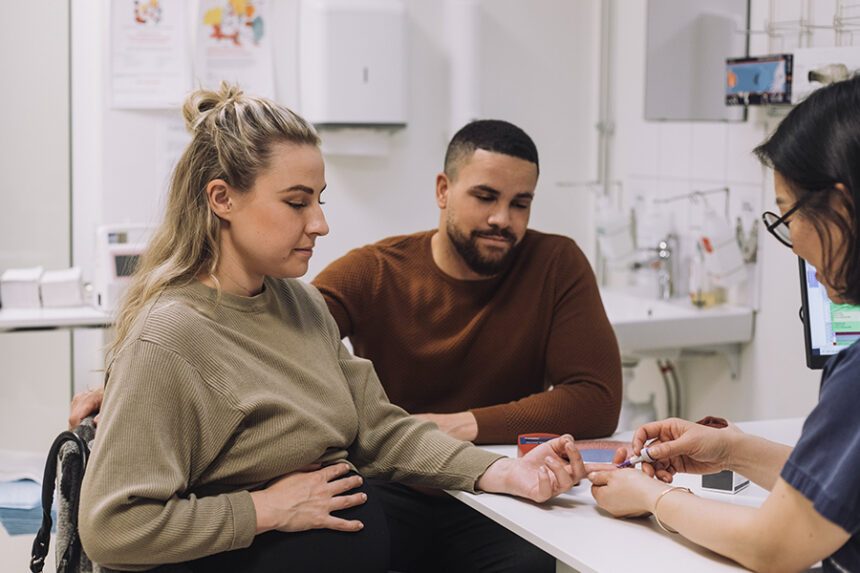
It’s a rite of passage for every pregnancy: the glucose test. When you’re between 24 and 28 weeks of pregnancy, you’ll drink a sugar solution and have your blood drawn after an hour to see how well your body is processing sugar. If the results are elevated, you’ll do another test.
These tests help determine if you have gestational diabetes, “high blood sugar that develops during pregnancy due to placental hormones,” says UNC Health OB-GYN Henny Liwan, MD.
It’s important to take the diagnosis seriously and follow your doctor’s treatment plan carefully, but it doesn’t mean you or your baby aren’t healthy.
“Those hormones are beyond your control, and everyone’s at risk,” adds UNC Health dietitian Jessica Iselin, RD, LDN. “A lot of patients are surprised at the diagnosis because they eat well and exercise, but it’s the placenta’s fault. This isn’t because you had too many cookies in your first trimester.”
Dr. Liwan and Iselin explain what a diagnosis of gestational diabetes means for the rest of your pregnancy and your overall health.
Risks of Gestational Diabetes
Gestational diabetes is common, affecting up to 9 percent of pregnancies in the U.S. It increases risks for both the mother and the baby.
“There’s a risk that the baby gets too big, causing a difficult delivery,” Dr. Liwan says. “If the baby has a bigger shoulder, that can cause shoulder dystocia, where their shoulder gets stuck in the pelvis. That’s an emergency situation.”
If it’s clear that the baby is getting too big, you may need an early delivery. If the baby is too early, that can cause breathing difficulties and respiratory issues. A larger baby also can increase the risk of cesarean section if vaginal labor does not progress.
“Another complication is that the baby is so used to sugar in utero that once the baby is born and that sugar supply is no longer available, babies can get hypoglycemia, or low blood sugar,” Dr. Liwan says.
Severe hypoglycemia can cause seizures; babies may need glucose through an IV to compensate for that lack of sugar.
Gestational diabetes increases the mother’s risk of high blood pressure and preeclampsia, and it also increases the risk she will develop type 2 diabetes at some point in her life.
Here’s the good news: Many of these risks can be minimized if gestational diabetes is well-controlled, which is why you’ll start working with some additional experts after diagnosis.
Managing Gestational Diabetes During Pregnancy
Most women are able to control gestational diabetes with diet and exercise, so one of the first things to do after a diagnosis is to meet with a nutritionist.
“We create an individualized dietary plan that limits carbohydrates without over-restricting them,” Iselin says. “You need some carbs—they’re fuel for the brain and help the baby grow—but we talk about the carbs that can do more for your body than just raise blood sugar. Whole grains, beans and lentils, sweet potatoes and fruit are fiber-rich, nutrient-dense carbs.”
Iselin advises patients to pair carbs with protein, fat, and fiber to avoid post-meal blood sugar spikes and to eat three meals and two to three snacks daily to help stabilize blood sugar and avoid hunger.
“It’s better to eat carbs than to drink them, so avoiding juice and sugar-sweetened beverages like sweet tea, soda and lemonade is also important,” she says.
Regular, moderate exercise—ideally, 30 minutes of an activity like walking—is also important, as long as your doctor says it’s OK. A brisk walk of 10 to 15 minutes after every meal can help reduce blood sugar, Dr. Liwan says.
You’ll learn how to measure your blood sugar using a device called a glucometer, which requires pricking your finger. Typically, you’ll take four measurements a day: one when you first get up (your fasting blood sugar) and then a measurement an hour or two after every meal. If your blood sugar is above a certain threshold, you’ll be advised to contact your doctor.
“When the numbers are highest after a meal, that’s when you can have better control with diet, of what you eat and don’t eat,” Dr. Liwan says. “If your fasting glucose is elevated, there’s nothing you can do to control that. Your body needs help.”
That’s when your doctor might consider medication to manage your gestational diabetes, typically insulin or metformin. If you’re on medication, you’ll have more frequent ultrasounds to monitor the baby’s health.
What to Know About Gestational Diabetes After Pregnancy
Once your baby is born, they’ll have a few glucose checks in their first few hours to ensure that they don’t have hypoglycemia. Moms who had gestational diabetes typically do another glucose test when they’re six to 12 weeks postpartum.
For most women, gestational diabetes goes away after childbirth. But babies who were born to moms with gestational diabetes and women who had gestational diabetes are at higher risk of developing type 2 diabetes at some point in their life, so it’s important for your family to continue eating a healthy diet and exercising.
“We recommend women get a diabetes screening at least once every three years because of that increased risk,” Dr. Liwan says.
Once you’ve had gestational diabetes, you’re at higher risk of having it again in any subsequent pregnancies. While you may not be able to prevent it, there are steps you can take to reduce your risk and improve your overall health.
“Do the things you’d do to prevent type 2 diabetes,” Dr. Liwan says. “Try to maintain a healthy weight with a balanced diet and exercise. You learn a lot about how to make healthy choices when you have gestational diabetes, so that helps with following a healthy diet after pregnancy, too.”
If you’re concerned about your risk for diabetes, talk to your doctor. If you need a doctor, find one near you.