When stroke symptoms begin, every minute matters—millions of brain cells are lost each minute. That urgency doesn’t end after treatment; starting rehabilitation early is just as critical to recovery.
“Stroke rehabilitation starts in the hospital, shortly after you’re admitted for a stroke,” says John Baratta, MD, UNC Health medical director of stroke rehabilitation. “A physical medicine and rehabilitation provider sees you in that setting and recommends a treatment plan you’ll implement as soon as you’re stable.”
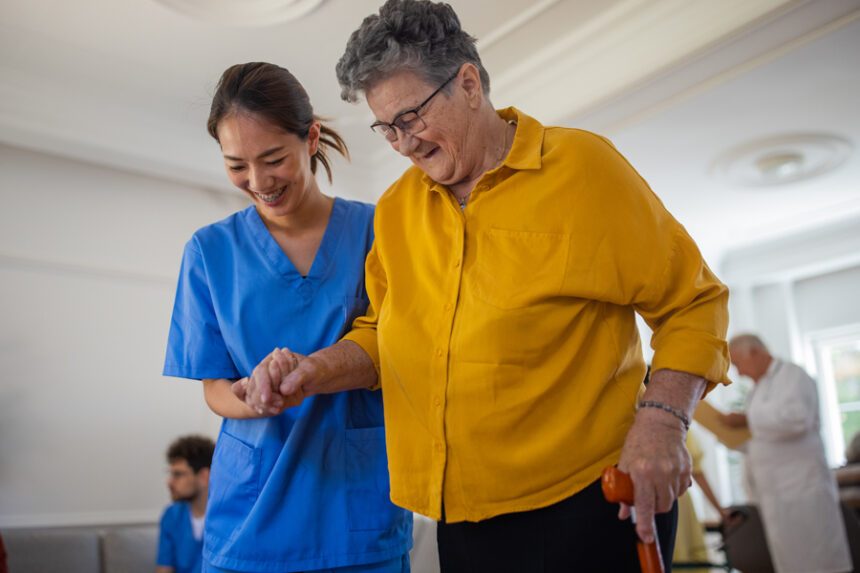
There are several settings for stroke rehabilitation, and you may move between them, depending on your needs. Stroke rehabilitation programs are offered in inpatient hospital settings, through skilled nursing facilities or via home health, and in outpatient clinics.
They all share the same goal: to help you regain the skills and strength you need to return to the activities you enjoy.
“Stroke rehabilitation helps with physical function, communication, daily activities and reintegration into the community,” Dr. Baratta says.
Dr. Baratta provides some tips for getting the most out of your program.
-
Expect many different types of therapies.
Your stroke rehabilitation program will be based on your specific needs after stroke, and you’ll work with a variety of healthcare professionals—physicians, nurses, physical therapists, speech language pathologists, occupational therapists, counselors and case managers.
“The brain is very complex, and there are many different areas of the brain that can be impacted by a stroke,” Dr. Baratta says. “The specific areas affected are what determines what an individual experiences after a stroke, but most commonly, people can experience weakness, communication issues, cognitive impairment, swallowing problems, vision concerns, loss of bowel and bladder control and pain.”
This combination of symptoms can cause difficulties with mobility and performing activities of daily living. Your plan will focus on building these skills or finding workarounds so that you can have a good quality of life, so be ready for a full schedule of exercises and activities for the brain and body.
-
Give it time.
A stroke rehabilitation plan may be robust, but that doesn’t mean results will come quickly.
“I encourage people to recognize that stroke recovery is slow and they’ll need to be patient,” Dr. Baratta says. “I have patients who are a few years out and still making gradual improvement.”
Many people see a lot of improvement in the first three to six months, which can make you think you’re on a fast track, but keep in mind that some aspects of recovery will be slower.
“After a stroke, I tell people they’ll be much improved in several months compared to now, but that doesn’t mean they’ll be back to normal by then,” Dr. Baratta says, noting that your view of ‘normal’ will likely change as well. “Many people return to independence and doing the things that matter to them, but the way they do them may be modified or different than before.”
Your stroke rehabilitation team can help you understand your individual timeline. Check in with them if you feel your progress on any skill or therapy has stalled.
-
Find ways to make rehab more interesting to you.
A lot of your therapies will focus on activities of daily living that help you maintain your independence—dressing or feeding yourself, for example. But your team also will want to know about the activities you enjoyed before your stroke.
“We try to incorporate activities or hobbies the person enjoyed,” Dr. Baratta says. “We’ve had musicians bring their instruments in so they can start to practice as part of their recovery and people who enjoy fishing bring in their poles to practice the fine motor skills that hobby requires.”
Focusing on the activities you love will help you stay engaged with the long work of recovery.
“The more therapy a person can get, the better their ultimate recovery level is,” Dr. Baratta says. “We don’t want people to get burned out from doing therapies that aren’t relevant or productive to them. Identifying what’s important to a person will help them stay motivated.”
-
Watch for mental health issues.
About a third of people who survive a stroke will experience depression.
“A new disability, such as that caused by stroke, along with the chemical changes that occur in the brain during a stroke can lead to changes in mental health,” Dr. Baratta says.
Post-stroke depression can affect your willingness to engage in your therapies, stalling your progress. You might withdraw from friends and family or become overly anxious about another stroke.
Talk to your rehabilitation team if you have concerns about your emotional state.
“Providers are very aware of the mental health challenges that survivors may encounter,” Dr. Baratta says. “We can offer medication and help you engage in counseling services that are beneficial for adjusting to these sudden changes.”
-
Ask about other resources that can help you and your family.
Your stroke rehabilitation team can help connect you to other resources you might need for your recovery, including vendors who can complete home modifications, such as a ramp or wider doorframes to accommodate wheelchairs. They also can help you adjust to those modifications.
“We consider the environment that we expect to discharge a person back to, so we ask the family to take detailed measurements about the height of stairs or the height of a bed, so we can work with you on transferring in and out of a bed that’s at that approximate height,” Dr. Baratta says.
Caregivers need support, too.
“A stroke is very hard on the individual who sustained it, but it’s also challenging for the family members who are suddenly called upon to provide a wide range of assistance that was not previously required,” Dr. Baratta says. “We want caregivers to be aware of burnout due to the very physical nature of care required, and we can provide resources that will help with daily activities and give support.”
If you’re recovering from a stroke and need help, talk to your doctor or find one near you.