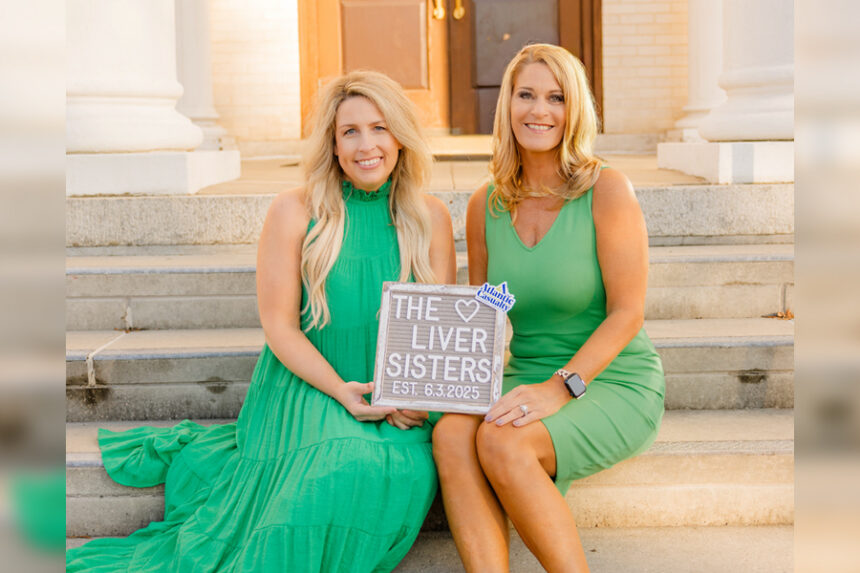
On an otherwise typical work day, Cristy Brewer received some of the worst news of her life, followed by the most hopeful.
It was March 2025, and Brewer was in need of a liver transplant because of cirrhosis, also known as end-stage liver disease. There are far more people in need of livers than livers available, and Brewer was waiting on the national transplant list.
That day, her doctor told her that an MRI revealed she had developed ascites, fluid in the abdomen, which meant her disease was getting worse. Eventually, without a transplant, it would be fatal.
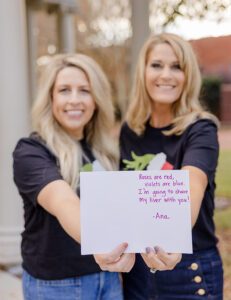
Brewer tried to hide her emotions and keep working. But then, seemingly out of nowhere, her coworker Ana Cooke came into her office and handed her a card: Roses are red. Violets are blue. I’m going to share my liver with you. Cooke had gone through the testing process and was a match to be a living liver donor.
“For her to come in two hours later, it turned one of the most devastating moments into such a blessing,” Brewer says.
The transplant took place in June 2025, and while recovery was challenging, both women are doing well and have resumed their active lives. Just friendly coworkers before Cooke’s offer, the pair are now “forever” friends, they say.
“For a little bit of time and discomfort, I was able to be a bright spot in somebody’s life,” Cooke says. “And I developed a friendship with someone that is going to be lifelong.”
Life with End-Stage Liver Disease
Brewer, 49, who is married with an adult son, went from a healthy and active woman to someone in need of an organ transplant very quickly.
Toward the end of 2023, her gums started bleeding for hours at a time. On Christmas morning, she woke to find blood clots on her pillow and in her hair. The next day, she went to the emergency department, where a nurse asked her if her eyes were always yellow. She spent three nights in the hospital but left with no real answers, just that something seemed to be very wrong with her liver. Brewer, who lives in Pikeville, North Carolina, stopped drinking alcohol and started to make appointments with specialists.
On March 11, 2024, her gastroenterologist delivered bad news after a liver biopsy: “He called me and said, ‘I’m so sorry. You have cirrhosis, and it’s stage 4,’” Brewer says.
Cirrhosis is permanent scarring of the liver that prevents it from working properly. Eventually, the disease leads to liver failure, which is life-threatening. It is most commonly caused by hepatitis B and C, long-term alcohol use, and fat buildup in liver that is not caused by alcohol use.
Symptoms of end-stage liver disease include fatigue, chronic pain, fluid retention, difficulty eating, nausea, and thinking issues such as fogginess and confusion. Jaundice can yellow the skin and whites of the eyes, as the emergency department nurse had noticed on Brewer.
“The damage that happens to the liver happens quietly, so by the time people start having these symptoms, they’re often very sick,” says UNC Health gastroenterologist and transplant hepatologist Hersh Shroff, MD, who treated Brewer.
Over the coming months, Brewer felt worse and worse. Her joints ached and her blood work showed that she was losing blood, requiring four transfusions.
She underwent evaluation to be on the national transplant list for livers and was officially added in August. She had a MELD (model for end-stage liver disease) score of 20; the scale goes from 6 to 40, and generally, a score over 15 along with worsening symptoms calls for a transplant.
People may wait on the transplant list for months or years for a deceased donor’s liver; the sickest people are prioritized—those with higher MELD scores than Brewer’s.
“People wait and wait until they get sicker, but some people get too sick too fast and miss their window, because then they’re not well enough for surgery,” Dr. Shroff says.
That’s why it’s ideal to get a living donor.
Sharing Her Liver and Finding New Purpose
At work, where Brewer is an assistant vice president of information technology at an insurance company, the human resources department asked her if they could send out an email about her health situation.
Brewer initially declined the offer of a company-wide email; it felt like too much, she says. But ultimately, she relented. Across the office, Cooke opened it.
Cooke, 37 and a data and analytics supervisor at the company, immediately felt called to help Brewer. The two weren’t close, but Cooke felt an empathy born of her own heartache. In recent years, her mother had died from gallbladder cancer and her longtime partner from addiction.
“It changes your perspective on things, when you lose someone you love. All I could think of was her family, her husband, her kid,” says Cooke, who lives in Greenville, North Carolina. “I’m healthy, what can I lose?”
Cooke went through extensive testing, including a CT scan and MRI, a cardiovascular workup including a stress test, and many blood draws to see if she was a match for Brewer. The donor and recipient must have blood types that work together and be a size match; the donor needs to retain one-third of their liver and the donated portion must be of adequate size for the recipient, says UNC Health transplant surgeon Sorabh Kapoor, MD, who operated on Cooke.
Cooke’s workup was designed to make sure she was healthy enough to undergo the stress of donation and recovery, and that she was psychologically stable and supported.
“Living donors are doing it without any benefit for them, they’re doing it all for somebody else,” Dr. Kapoor says. “We want to reduce their risk as much as possible.”
Cooke got the go-ahead and walked into Brewer’s office on that fateful day, when she was dismayed about her worsening condition.
“I could see it on her face, she was very upset,” Cooke says. “Then she read the card, and she just lost it, all of us just lost it.”
A Marathon Day of Simultaneous Surgeries
In the days leading up to the transplant, Cooke didn’t waver in her decision to donate. (Living donors can change their minds at any time, right up until surgery begins.) Brewer was worried about Cooke’s health after the transplant: “I was scared she would regret it. I wondered if she would have complications. She was doing this for me, giving me such a gift. I worried more about her than I did myself.”
On June 3, 2025, just before they were taken to their separate operating rooms, the women and their families prayed together.
Dr. Kapoor removed about 65 percent of Cooke’s liver, which was rushed to Brewer’s operating room. There, UNC Health transplant surgeon Chirag Desai, MD, removed Brewer’s diseased liver in its entirety and connected Cooke’s donated liver, including the complex web of blood vessels and ducts. All in, the surgeries took about 10 hours.
People who get a liver from the deceased donor list often have a MELD score around 30, Dr. Desai says. “People at 20, like Cristy, are at such a disadvantage and have an extremely low probability of obtaining a liver. So to have a strong living donor like Ana and the facility to be able to do it is so lucky for her.”
When Brewer woke up, she still had a breathing tube inserted, and she scribbled on a piece of paper, “How is Ana?” Her husband, mom and friends were happy to report Cooke had come out of surgery and was up and walking already.
It was a promising start to what would be a “rough week” in the hospital for Cooke, who had pain in her chest and ribs and felt nauseated and weak. She had drains in her body to collect fluid, and she had to eat a liquid diet because surgeons also removed her gallbladder, a standard part of liver transplant.
Brewer spent 10 days in the hospital but immediately felt better in her joints. “I had been hurting for so long and I didn’t hurt. I just couldn’t believe that nothing hurt.”
Life After Living Liver Transplant
Cooke spent months recuperating at home, where just a walk down the driveway and back exhausted her. In August, she was able to return to work, and not long after doctors confirmed her liver had fully regenerated.
She still gets more tired than she used to, and she has to avoid fried foods that make her feel bad because she doesn’t have a gallbladder, but, “I am back to my normal self and able to do all the things I did before,” Cooke says. (And because her mother had gallbladder cancer, she is happy not to have one.)
That means walking her beloved dog, Bru, spending time with her older sisters and going on dates with her new boyfriend.
Brewer returned to work part-time in October, and then full-time by the end of the year. She is exercising daily and takes several medications to prevent her body from rejecting her new liver.
“Even on days I don’t feel so great, I feel better than I did,” she says.
The women have remained tight; even their families have become close. Cooke counts Brewer as a third older sister, she says.
“We needed each other,” Cooke says. “Doing this for her helped me through a horrific time, and it saved her life. What better story could you have?”
If you have questions about organ donation, talk to your doctor or find one near you.