
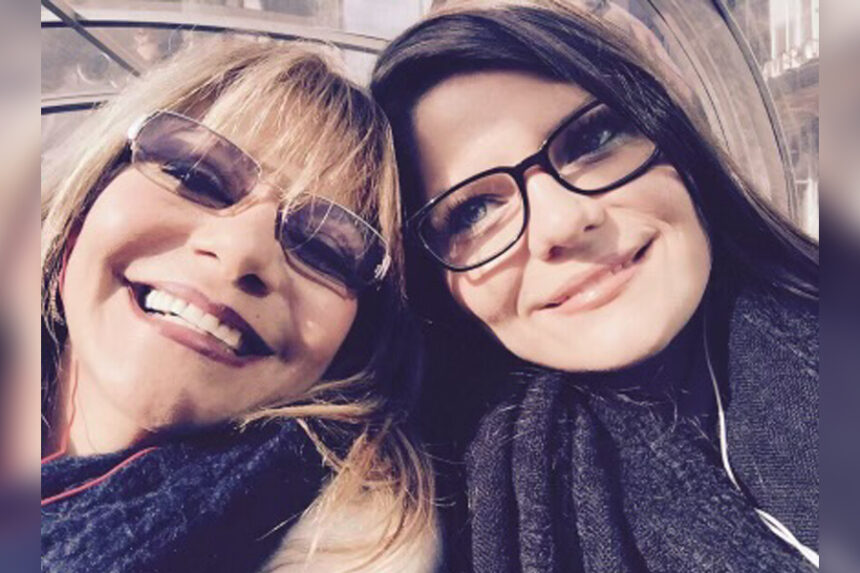
Colette Klotz’s experience with cancer has been frightening, frustrating and often painful. Her comfort through it all has been her beloved daughter, Jacqueline, a nurse practitioner.
Colette lives with Jacqueline, who helps her manage her medications, takes her to appointments and communicates with her doctors. It’s fortunate to have a caregiver with medical expertise, Colette knows. But being with her daughter is the real benefit.
“She’s very thoughtful, very caring, very warm, she’d do anything for you,” Colette says. “She’s my precious girl.”
Jacqueline adores her mom right back—“she’s my best friend”—and has been happy to take care of her. But she has at times been overwhelmed with the responsibility of being a caregiver. Her mom trusts her wholeheartedly, but what if she misses something? Or makes a wrong decision?
Those fears got lighter when she met Carrie Lee, MD, a UNC Health thoracic oncologist who specializes in the treatment of lung cancer. 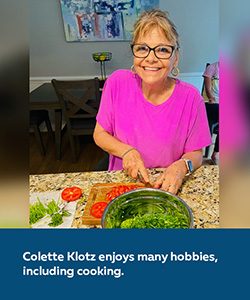
“She put her hand on my shoulder and said, ‘Let me remove some of that burden from you and let me care for her, too,’” Jacqueline says. “I couldn’t stop crying. It was such a relief.”
Colette, 69, remembers that moment. “She said, ‘I will care for your mom as if she were my mom.’”
Ever since then, Jacqueline and Dr. Lee have been working together to improve Colette’s health and quality of life.
A Long and Exhausting Health Ordeal
By the time Colette saw Dr. Lee for the first time, in March of 2025, she had been dealing with about 18 months of serious and often confounding health problems.
In October of 2023, she was diagnosed with stage 1 non-small-cell lung cancer at another hospital system and had surgery to remove the tumor and part of her lung. Colette had been getting imaging every six months because she had a history of smoking, and they thought they had caught the cancer early.
By May of 2024, cancer cells had regrown along the surgical incision. But before Colette could get treatment, she developed blood clots that traveled to her right leg. Her toes weren’t getting enough blood, and she was in horrible pain. She and her husband Marty, Jacqueline’s dad, moved from Jacksonville, North Carolina, into their daughter’s house in Cary.
“She was in pain, her toes were actively dying, and over a month and a half she never slept more than 21 minutes consecutively,” says Jacqueline, who was timing her mother’s rest, desperate for progress. “I felt helpless and we were all exhausted.”
Eventually, Colette had to have all five of the toes on her right foot amputated. After that, she was able to undergo five rounds of stereotactic body radiotherapy, a type of radiation, to shrink her tumors.
One day in December, Jacqueline got home from work and Colette said she didn’t feel right. Jacqueline took her vitals and found her blood pressure and temperature were both high; she had to remind her to swallow when she had Tylenol in her mouth.
Imaging revealed lesions on her brain, and Colette had more radiation treatments.
“After the amputation, I had said, ‘Thank you, Jesus, we’re done,’” Colette says. “And now with this diagnosis of cancer in my brain, it just put me down in the dumps. It was very depressing and confusing.”
Finally, they saw Dr. Lee, who requested a second look at the original pathology slides, leading to the discovery that Colette had a different type of lung cancer, small-cell lung cancer. Small- cell lung cancer is typically more aggressive than non-small-cell lung cancer. It was a blow, but now at least they knew what they were dealing with.
“Non-small-cell and small-cell lung cancer behave very differently, clinically, and have a very different treatment pathway,” Dr. Lee says. “It’s so important for patients to advocate for themselves and consider seeking a second opinion if their course becomes complicated.”
Meeting a Devastating Diagnosis with Hope
Colette’s cancer is stage 4 and cannot be cured, but Dr. Lee told her she did have options for treatment.
“When we don’t have a high probability of cure, the goal is to improve quality of life, reduce symptoms associated with cancer and prolong life,” Dr. Lee says.
She suggested a combination of chemotherapy and immunotherapy and told Colette she was choosing lower doses to minimize side effects. She would prescribe nausea and sleep medicine and consult with palliative care providers to make sure Colette felt as well as possible.
“We tried to build Colette a nest of providers to help support her through her illness to maximize quality of life,” Dr. Lee says.
Of course, the decision was Colette’s, with Jacqueline’s help.
“At first, I didn’t want to do it,” Colette says. “But Dr. Lee, she is so sweet, and the way she explained everything, I decided to go for it.”
More Time Together
Colette tolerated the chemotherapy well and her cancer is under control, Dr. Lee says. She goes to N.C. Basnight Cancer Hospital for a monthly immunotherapy infusion and gets scans to check for cancer growth every three months.
At home, she likes to crochet, knit, garden, refurbish furniture and video chat with her 1-year-old grandson, Logan; his dad is Colette’s son Gabriel, and they live in Virginia. She likes to cuddle with Jacqueline’s dog, Milo, and often makes tabbouleh, a dish from her native Lebanon. 
Jacqueline is working on developing her own telehealth practice. She continues to be at her mom’s side at every appointment.
“The two of them are pure love,” Dr. Lee says. “Jacqueline loves her mother so much and wants to do right by her.”
It doesn’t escape Colette that while her health has not been lucky, she is fortunate to have Jacqueline with her through it all.
“I won’t miss a minute with her,” Colette says.
If you have questions about a diagnosis, talk to your doctor or find one near you.