A pulmonary embolism is scary; there’s no denying that. When a blood clot gets lodged in the arteries that connect the lungs and heart, it can mean instant death—and it does for about 25 percent of people who experience pulmonary embolism.
That’s a high fatality rate, but even so, it means 3 in 4 people with pulmonary embolism will survive. It’s important to know the symptoms and seek emergency medical care if you recognize them.
“A pulmonary embolism is a big deal—it’s a leading cause of death from cardiovascular disease, after heart attack and stroke—but most people don’t die,” says W. Cameron McGuire, MD, MPH, a UNC Health pulmonologist and critical care doctor. “It’s important to emphasize that most people with a pulmonary embolism recover and are completely fine afterward.”
Risk Factors for Pulmonary Embolism
Most pulmonary embolisms start as a deep vein thrombosis (DVT), a clot elsewhere in the body, typically the leg, which can travel to the lungs. About a million people in the U.S. have a DVT each year, Dr. McGuire says, and about a third of those become pulmonary embolisms.
“There are a lot of risk factors, but the two biggest are large surgeries and cancer,” Dr McGuire says. “Any surgery in the abdominal cavity that lasts more than two hours, or an open orthopedic surgery in the lower extremities, like the knee or the hip, where you have to go under anesthesia, is a risk.”
Some cancers and some cancer treatments increase your risk because your blood can become stickier, making it more likely to clot. What’s tricky, according to Dr. McGuire, is that while some cancers are more highly associated with pulmonary embolism (including brain, pancreatic, colorectal, stomach, kidney, lung and ovarian), it’s difficult to predict which people with those cancers might develop one.
Other risk factors for a pulmonary embolism include chronic inflammatory conditions, implanted devices such as catheters, long periods of immobility from being sick or in the hospital, as well as pregnancy and particularly the first four to six weeks of the postpartum period. Being sick with COVID-19 or recently recovering from the virus raises risk, as does a trauma to your legs or feet.
Some people have a genetic clotting disorder, where a gene mutation makes the blood sticky, but most patients with these genetic mutations never develop clots, Dr. McGuire says.
Other risk factors are considered weaker for pulmonary embolism, such as obesity, smoking, oral contraceptive use or menopause hormone therapy.
Despite what you may have heard, the link between long-distance travel and blood clots is real but not strong, Dr. McGuire says.
“It has to be really long-distance with no movement. If you’re on a road trip and stopping to pump gas, use the bathroom regularly, or you’re stretching your legs on a long flight, it’s unlikely that you’ll develop a clot.”
In fact, if someone came into the hospital and the only risk factor they could identify for a blood clot was a cross-country flight, it would be considered an “unprovoked” clot. A large percentage of pulmonary embolisms are labeled unprovoked, meaning that doctors have ruled out every known medical cause.
Symptoms of Pulmonary Embolism
If you notice any symptoms of a DVT—sudden swelling, warmth, pain or tenderness in an extremity, reddened skin or larger-than-normal veins—you should seek emergency care so the clot can be treated before it has a chance to move toward your lungs.
A small clot may not give you advance warning, though, so you may only experience symptoms when the clot reaches your pulmonary arteries.
Sudden shortness of breath is a sign. Also watch out for progressively increasing instances of shortness of breath with mild exertion.
“If last week you went to the grocery store with no problem, and today, going to the grocery store left you winded, that could be a sign,” Dr. McGuire says. “You may be able to feel your heart beating much faster than normal, to the point that you’re aware of it in a way you never have been before.”
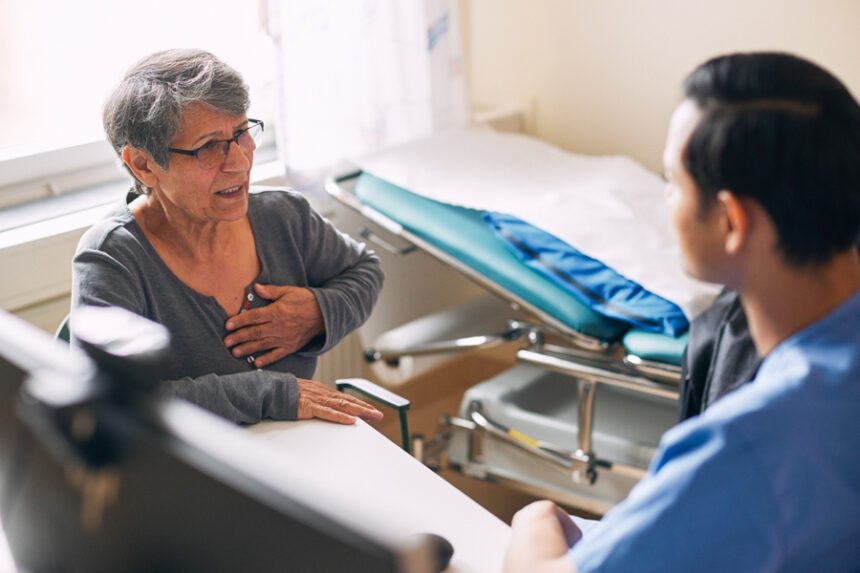
You also may experience chest pain. While chest pain from a heart attack tends to feel like squeezing, pain from a pulmonary embolism is sharp and stabbing. It can be on one side of your chest or both, and it may happen more when you breathe in or move. More rarely, you may cough up blood.
If you’re having these symptoms, go to urgent care or an emergency department. You will need a CT scan (imaging of your chest) to see if there’s a clot. Sometimes, pulmonary embolisms with no symptoms are identified when you have a CT for other reasons, such as checking for cancer in the lungs.
Pulmonary Embolism Treatment
Treatment for pulmonary embolism will depend on the severity of your symptoms and the potential risk of your specific clot. There are four levels of risk, Dr. McGuire says.
“With a high-risk pulmonary embolism, the person is on the precipice of death—very high heart rate, low blood pressure, low oxygen,” Dr. McGuire says. “These patients need oxygen to support their breathing and immediate procedures to suck the clot out or dissolve the clot.”
These high-risk cases account for about 10 percent of pulmonary embolisms each year.
Next, there are two levels of intermediate risk, where the person is generally stable but there’s concern that symptoms could worsen quickly, either because of the size of the clot or damage to the cardiovascular system that can be seen on CT imaging and in blood work.
“If you’re intermediate-high risk, you’re going to be admitted, but you may not need a procedure right away,” Dr. McGuire says. “You’ll be started on powerful IV blood thinners and will be monitored very closely with labs and additional tests. If you’re intermediate-low risk, you might be admitted for an IV blood thinner, but you might be able to go on oral blood thinners and be discharged sooner.”
Finally, about half of people are considered low-risk, meaning that while they have a clot in their lungs, it’s small and not causing major strain on the lungs or heart. You typically won’t need hospital admission, but you will start a medication called a direct oral anticoagulant (DOAC), commonly apixaban (Eliquis) or rivaroxaban (Xarelto). These medications are blood thinners, and you’ll start with a higher dose to provide immediate protection from your clot and then taper down to a lower dose.
“In those first 90 days, you’re at high risk for another clot, so you need to take your blood thinner with the same consistency with which you brush your teeth or lock your front door,” Dr. McGuire says
During that time, stay active with mild to moderate exercise.
“A lot of people get this diagnosis and they’ll sit at home and do nothing because they’re scared,” Dr. McGuire says. “Your heart is a muscle and needs to recover function and strength.”
It may take a pulmonary embolism a few weeks to fully resolve once you start a blood thinner. If you experience worsening symptoms, seek emergency care; for lingering symptoms, talk to your doctor.
Long-Term Management of Pulmonary Embolism
After the immediate threat of your clot is addressed, you and your healthcare provider will work together to prevent future clots. That may mean staying on a blood thinner indefinitely.
“If you had an unprovoked pulmonary embolism, the risk of another one is high if you don’t take your medication,” Dr. McGuire says. “The 10-year risk of another pulmonary embolism is approximately 40 percent in men and 30 percent in women if they stop their blood thinner.”
The risk is highest in the first year, but you should discuss any decisions about stopping your blood thinner with your healthcare provider, he says.
When you’re taking a blood thinner, you’re at an increased risk of internal and external uncontrolled bleeding. That means you’ll have to avoid nonsteroidal anti-inflammatory drugs (NSAIDs) such as ibuprofen and aspirin and reduce alcohol consumption, both of which can cause internal bleeding.
“For most people, the risk of bleeding on a blood thinner is quite low, and the risk of another clot usually outweighs the risk of bleeding,” Dr. McGuire says. “You can safely be on a blood thinner for a long time, but it does require more visits with your doctor.”
Fortunately, DOACs (first approved by the Food and Drug Administration in 2010) offer more opportunities to adjust the dosage than older blood thinners, such as warfarin (Coumadin), which came with more risk with surgeries or activities where you could be injured.
“If you want to go skiing, and you’re worried about a bump causing a bleed, we can hold DOACs for a few days and have you restart on the last day of your trip,” Dr. McGuire says. “If you stop warfarin, it takes days for the blood to get thicker, but DOACs have more of an on-off switch.”
Don’t change your dose on your own; work with your doctor on what’s most appropriate for you.
If you have another heart condition for which you take antiplatelet medications (including aspirin), talk to your doctor about the benefits and risks of your blood thinner. If you still have a menstrual cycle, a blood thinner can affect the length and heaviness of your period and put you at risk for anemia; ask your OB-GYN about hormonal options that could help.
If your pulmonary embolism had a clear cause, such as a hip surgery, you may be able to stop the blood thinner after 90 days. If you have a chronic condition such as cancer, your doctor will determine your best course of long-term maintenance.
One of the most difficult parts of recovering from a pulmonary embolism is fear of another one.
“There is a ton of anxiety, depression and post-traumatic stress around a pulmonary embolism diagnosis that significantly affects quality of life,” Dr. McGuire says. “It’s important to talk about, and you don’t have to suffer with those symptoms on your own. You can still live life on your terms.”
If you’re concerned about your risk for blood clots, talk to your doctor or find one near you.