
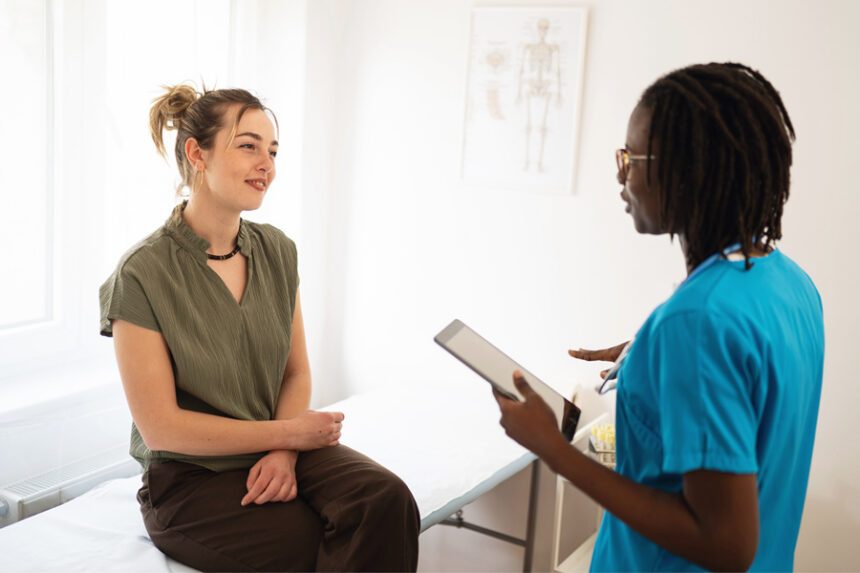
If you’ve been delaying your well-woman gynecological exam out of fear or anxiety, you’re not alone. Studies find that women put off scheduling this appointment and feel a lot of worry or embarrassment about it.
Rest assured, your provider understands that and wants to help you through it.
“Pelvic exams are very routine to us, and there’s nothing we haven’t seen,” says UNC Health family nurse practitioner Mariah L. Carey. “There’s nothing abnormal or embarrassing about it to us, but we know it can feel invasive. Tell your provider if you’re feeling apprehensive. We try to provide kind care to everyone, but we want to be extra careful if you’re anxious.”
It’s important not to let anxiety get in the way of this exam, because it can save your life.
“As women, we can put other people first—children, significant others,” Carey says. “You need to see your provider for preventive care so you can get the cancer screenings you need and we catch potential problems and treat them.”
Knowing what to expect—and why these things are part of the exam—can help.
Scheduling Your Well-Woman Exam
You can receive gynecologic care from a variety of providers—a gynecologist, a family medicine or internal medicine provider, and some pediatricians. Gynecologic issues, such as concerns with menstruation or a desire for contraceptives, can start in adolescence, but these early visits may not require a pelvic exam.
The U.S. Preventive Services Task Force and the American College of Obstetricians and Gynecologists recommend that cervical cancer screening start at the age of 21 with a Pap test, done as part of a pelvic exam.
From the ages of 21 to 29, a Pap test is recommended every three years; from 30 to 65 years of age, women should either have a Pap test every three years, an HPV test every five years, or both a Pap and an HPV test every five years.
Ask your provider which approach is recommended for you. You should aim to see either your primary care provider or your gynecologist for a well visit regularly; ask them how often you should have a pelvic exam. This test helps your provider catch any changes to this area early.
“Most people are not looking at this part of the body in the mirror, so we are the eyes for this space,” Carey says. “We want to catch problems early before they progress, like skin conditions or any issue with your pelvic organs.”
If you want to have children someday, establish regular gynecologic care early so that your provider can help you be at your healthiest before you become pregnant and address any problems that might affect your fertility. If you don’t want children, you still need regular screening for cervical cancer, and you’ll want to have established care for any issues with menstruation, sexual health, menopause concerns and potential pelvic floor issues. While cervical cancer screening can stop at age 65 if you’ve had negative Pap and HPV tests, gynecologic care lasts a lifetime.
Preparing for Your Well-Woman Exam
Once you schedule your well-woman visit, it’s helpful to gather the same information you share with any provider—your family health history and a list of medications you’re taking. If you are seeing a new provider and can provide previous medical records, particularly if you’ve had a history of abnormal Pap tests, that’s also helpful. Take a look at your calendar; you’ll be asked the first day of your last period.
If you have any questions or concerns for your provider, write them down so you don’t forget.
Other than that, come as you are. Your provider doesn’t care if your legs are shaved or what your pubic hair looks like. They won’t be bothered by any discharge or vaginal odors (but if you are, ask your provider if you’re within the range of normal). You don’t have to abstain from sexual activity beforehand and it’s usually OK to be seen while you’re menstruating.
“I would avoid being seen on the heaviest day of your period, because it can be more difficult to see the internal organs and your Pap might not be as accurate,” Carey says. “But none of it is embarrassing to us.”
If you’re really worried in the days leading up to your exam, consider whether having a friend or family member there for support would be helpful to you. Some offices may provide medication for anxiety ahead of time if you ask.
The Well-Woman Exam: Vitals, History, Overall Health
If you’ve ever had a physical, your well-woman exam will start the same way: There will be some paperwork, and a nurse or medical assistant will check your weight and blood pressure. At some offices, you may have a finger prick to check your blood sugar and provide a urine sample to check for infections.
You’ll be taken to an exam room, and the nurse or medical assistant will go over your paperwork and see if you have any concerns. You’ll change into a gown that will give your provider access to your breasts and pelvic area, but you can remain covered until they begin the physical exam.
Your provider will come in the exam room to talk before your exam. In addition to asking the questions your primary care provider asks about diet, exercise, alcohol and tobacco use, and mental health, they’ll ask about menstruation and sex.
“We’ll want to learn about your period, if you’re having regular cycles or any pain with your cycles,” Carey says. “We’ll ask if you’re sexually active and about your sexual history. We’ll go over contraception and talk about whether you desire children. We’ll want to know if you’ve ever had a sexually transmitted infection, if you’ve been vaccinated for HPV, if you’ve ever had an abnormal Pap test, if there’s a family history of cancer.”
It’s a lot of personal questions, but remember, your provider isn’t there to judge you. They just want to make sure they can provide you with the care you need to keep you as healthy as possible. They may recommend you have earlier screenings for breast or colon cancer or order additional tests for sexually transmitted infections.
This is also a time for you to ask questions, so if you’re wondering if something is normal or if you aren’t satisfied with your current form of birth control, let your provider know.
The Well-Woman Exam: Physical Exam
Next, it’s time for the physical exam. Your provider may listen to your heart and check your breasts for any lumps or abnormalities.
For the pelvic exam, you’ll lie down on the exam table, slide your pelvis to the edge and put your feet in stirrups, which keep your legs spread so your provider has a good view of your pelvic organs.
There likely will be another medical professional in the room as a chaperone, and you can have a support person as well. Your provider will usually narrate what they’re doing so you can stay informed and will continue to check in that you’re doing OK.
First, your provider will do a visual assessment of your vulva and vagina. Then, using lubrication, they will insert a closed speculum into your vagina. Once it’s placed, they open it—it looks like a duck bill when it’s open—to hold your vagina open so that they can see your cervix.
“Inserting this device can be quite uncomfortable for some people, but it helps if you can stay as relaxed as possible,” Carey says. “I tell people to let their bottom relax on to the bed, to let their legs relax open. We have multiple sizes of speculums, and we won’t use a big one if it’s not needed. If you don’t want to continue at any point, we can stop.”
In addition to checking your organs visually, this is the point where your provider will do a Pap test and/or an HPV test if you are due for one. During these tests, your provider will use a small brush to gather some cells from your cervix, which will be tested for abnormal changes that could lead to cervical cancer (in the case of a Pap test) or for specific strains of HPV that cause cervical cancer (an HPV test).
If you are having both tests, these cells can be gathered at the same time. You may feel some pressure or cramping when your provider collects those cells.
After removing the speculum, your provider will do a bimanual exam, which means that they put a gloved finger, using lubrication, into your vagina while pressing on your lower abdomen with their other hand. This allows them to check the size and position of your ovaries and uterus and to see if the cervix or uterus is tender, which can indicate infection.
After that, you’re done! If all the steps are completed, the physical exam typically takes about 10 minutes. You won’t get the results of a Pap test or HPV test right away, so your provider will explain when to expect results. If your Pap or HPV test shows a result that is abnormal or unclear, your provider will let you know your next steps.
In May 2024, the Food and Drug Administration approved an HPV test where you can perform your own swab of cervical cells, to be done in your provider’s office, and in May 2025, it approved an HPV test that can be done at home. These options can help you stay up to date with cervical cancer screening, but Carey still encourages you to have pelvic exams regularly.
“You get more comfortable with pelvic exams when you develop a relationship with your provider,” she says. And remember that your provider is here for you all year long, no matter when your well-woman visit is scheduled. “Don’t wait to come in if you have any concern that might require treatment. We’re here to provide the best care for you at any time.”
Questions about your gynecological health? Talk to your doctor or find one near you.