
Women are increasingly talking about their experiences with postpartum depression, which affects about 1 in 7 mothers, and it’s helping to break down the stigma of postpartum mood disorders.
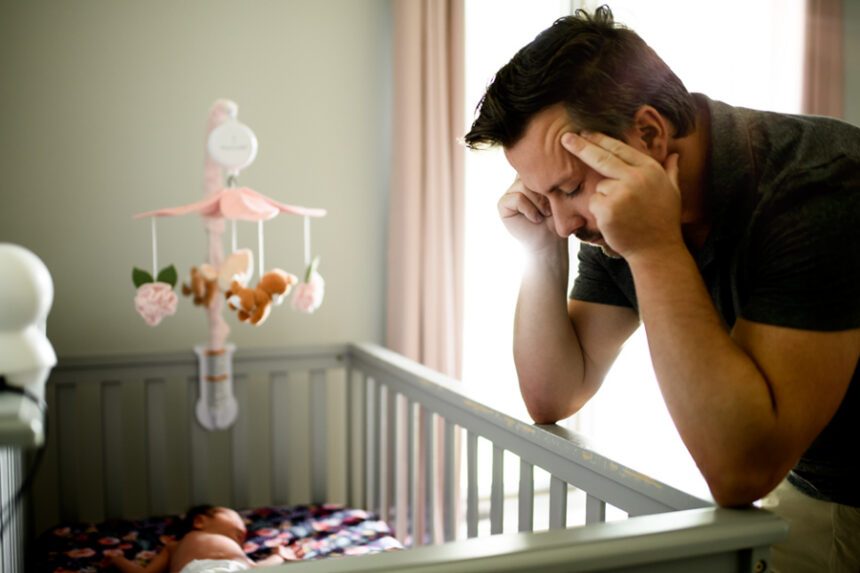
Now, it may be necessary to bring new fathers and their mental health into those conversations as well.
“This transition can also cause significant overwhelm, loneliness, excessive anxiety and a depressed mood in men,” says UNC Health psychologist Sultan Hubbard, PhD. “Rightfully, there’s been an emphasis on supporting moms, but men are also in a postpartum transition, and if they’re not doing well, it will affect how they relate to their partner and child.”
Paternal perinatal depression affects an estimated 10 percent of new fathers during their partner’s pregnancy or the first year of the baby’s life. Dr. Hubbard explains the symptoms to know and how to help a new dad.
Symptoms of Postpartum Depression in Men
Some of the signs that a new mom is experiencing a postpartum mood disorder include persistent sadness, frequent crying, feeling worthless as a parent and distant from the baby, and loss of interest in activities. These moms may struggle to sleep and eat, have difficulty concentrating and experience severe mood swings.
Men may have some of the same symptoms, but their struggle may not be so clear because men are socialized to suppress their emotions.
“Research suggests that men are less likely to be observed experiencing depression,” Dr. Hubbard says. “Instead, they’re more likely to be irritable. They might seem more snappy or angry, more on edge, more restless.”
Men may have trouble sleeping, lose interest in favorite activities and feel that their family might be better off without them.
“Men also experience a lot of concerns and doubts about the quality of their parenting when they’re struggling,” Dr. Hubbard says. “They may think, ‘My partner knows a lot more about taking care of the baby; it seems so natural for them. I’m a crappy dad.’”
Of course, it’s normal for any parent to have moments of doubt and irritability in the first few months of your baby’s life, especially after a sleepless night, but pay attention to when those feelings are persistent.
Risk Factors for Postpartum Depression in Men
Depression in the postpartum period can happen to anyone, and there may be some overlap in causes for both men and women.
In women, depression or anxiety can occur because of big hormonal shifts that happen after childbirth and during breastfeeding. Research shows men also experience changes in hormones and brain chemistry, meant to prepare them to be more attentive and caring to their baby, and those changes may make some men more susceptible to depression, Dr. Hubbard says.
This may cause confusion for men, who are well aware that they didn’t deliver the baby and are not responsible for breastfeeding. Many feel that they shouldn’t be struggling. That shame can exacerbate symptoms.
Similarly, sleep deprivation has a negative effect on both mothers’ and fathers’ moods.
A reproductive trauma, such as a prior pregnancy loss, infertility or a difficult delivery, raises the risk for both partners.
“A lot of the fathers I work with went through prolonged periods of infertility that were demoralizing or saw their partner deliver a baby while very scary things were happening,” Dr. Hubbard says. “They may have felt they couldn’t support their partners as well as they would have hoped.”
If a new mom is experiencing postpartum depression, it raises the risk that her partner will be depressed or anxious as well, Dr. Hubbard says.
As awareness of postpartum mood disorders grows, women are often encouraged to draw upon social supports, such as friends who have had babies and moms groups. Men, historically, have not been as encouraged to build this community, and can feel more isolated as a result.
“Many men don’t have as many close, intimate relationships outside of their partners to share what’s on their heart and mind,” Dr. Hubbard says. “There’s going to be a natural change to that relationship with the partner when the baby arrives, and a father with no community will be lonely, which will affect mood.”
Again, societal expectations of how men should feel and act don’t help.
“If the father’s emotional vocabulary is rather low or he has a low tolerance for emotion, that can set him up for mood complications,” Dr. Hubbard says. “He may not be able to observe or notice what’s happening with his emotions or be introspective about these changes, especially if he didn’t have another man to model that emotional understanding.”
If a new father has previously relied on avoidance-based coping mechanisms—hours of video games, substance use or gambling—that can also increase the risk of depressive symptoms in the postpartum period.
“A history of escapism and avoidance makes it hard to problem-solve and coordinate with your partner,” Dr. Hubbard says.
Getting Help for Men Experiencing Depression in the Postpartum Period
Dr. Hubbard encourages both new parents to review and complete postpartum mood questionnaires, usually given by OB/GYNs and pediatricians.
“A man may be going to pediatrician appointments with their partner, so start by telling the pediatrician that you have concerns,” he says. “They may be able to connect new fathers with support groups or individual or group therapies. A man’s primary care provider can connect him with a therapist or prescribe medications to help ease a depressed mood.”
New dads, like new moms, should work on building community during this time.
“Talking to other men about this transition can make you feel better, because you know you’re not doing this alone,” Dr. Hubbard says. “Seeking connection in a community is really important.”
Your community may offer support groups or social activities specifically for new dads, but if not, there are also online support groups, including one offered by Postpartum Support International.
Both parents need time to connect with themselves and each other during the postpartum period.
“You have to try to weave in some activity that brings joy and helps your mental health, even if it’s just for 15 minutes a couple of times a week,” Dr. Hubbard says. “Fathers should also find ways to connect with their partner in an intentional way. Couples need those frequent moments of connection—holding hands, words of affirmation, a small date, even if it’s within the home.”
Dr. Hubbard encourages any new parent who is struggling to ask for help, regardless of any fear about stigma.
“Any person who endeavors this noble, wonderful and treacherous task of parenthood needs that self-compassion,” he says. “Self-compassion has to be a regular stop in your journey.”
If you’re struggling with your mental health, talk to your doctor or find one near you.