
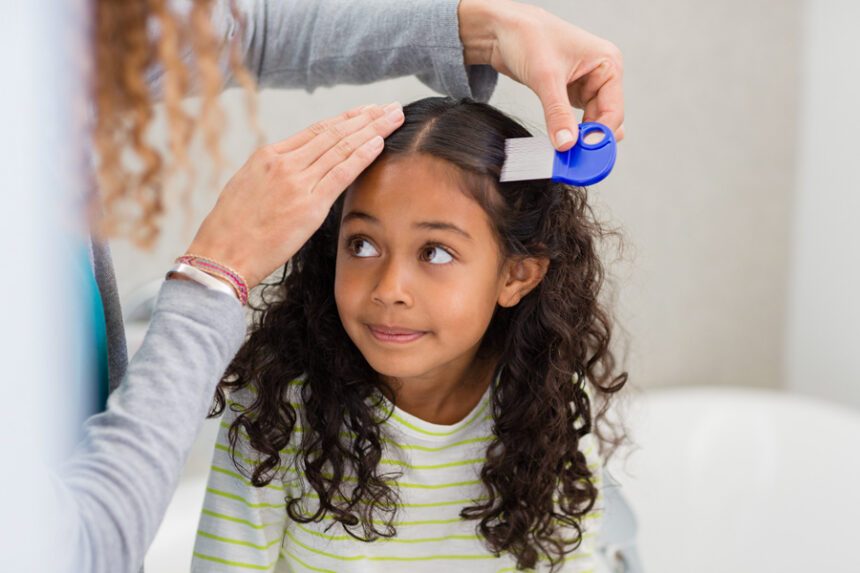
Your child keeps scratching their head. You look closely and see specks the size of sesame seeds. If the speck moves quickly into the hair, or if it’s attached to the hair, it’s head lice, or tiny insects that feed on human blood.
Take a deep breath. While this experience isn’t pleasant, your child is not at risk for any disease, and it’s not a reflection of your parenting.
“Very few children make it all the way through their school years without at least one case of head lice, so don’t be embarrassed,” says UNC Health pediatrician Pennie Bliss, MD. “You have not failed as a parent.”
Dr. Bliss explains what to do when you see head lice.
Step No. 1: Understand what head lice is.
There are a lot of misconceptions around head lice, so it can be helpful to understand how it happens.
“Head lice is not about hygiene, so it’s not that your child is unclean,” Dr. Bliss says. “Head lice doesn’t jump from person to person either, so you can’t get it just by standing next to someone. It’s spread by contact, so it’s usually because kids are prone to be kind and share their things—hats, headphones, combs or brushes.”
Head lice get around by crawling, and they crawl from one head to the next via objects, prolonged hugs or cuddles, or by sharing a pillow. They live for about a month, but if they don’t get a meal of blood from a scalp, they will die within a day or two. They don’t like light, so a scalp hidden by hair is a perfect feeding and breeding ground for them—and they do a lot of breeding very quickly.
“When there’s live lice on the scalp, they can lay up to 120 eggs apiece,” Dr. Bliss says; these eggs are called nits, the white or yellowish specks you may see on a piece of hair. Unlike dandruff, which should brush off easily from the hair or the scalp, nits are attached to the hair and do not spread from head to head.
While it’s difficult to prevent head lice entirely, teach children to not share hats, headphones or other things that touch their hair at school.
Lice don’t live on animals, so your pet can’t spread lice or get it from your child.
Step No. 2: Try the effective over-the-counter option.
If you see head lice, you can treat it on your own with over-the-counter permethrin lotion (brand name Nix).
“This is usually effective if used properly, so follow the directions,” Dr. Bliss says. “The other over-the-counter options are not as effective, and don’t use a home remedy, like mayonnaise.”
Typically, you’ll wash your child’s head with shampoo, dry it so it’s damp, and then apply the lotion or cream to your child’s head and scalp. After the length of time specified on the bottle, you can rinse your child’s head.
The lotion should kill all live lice, but the nits will remain. While their hair is still wet, separate your child’s hair into sections and comb out any nits that you see. You may not be able to get them all, but nits cannot travel from head to head and do not cause itching.
You’re not done yet, though, so keep reading.
Step No. 3: Ask your child’s doctor about a prescription option.
Some cases of head lice are resistant to permethrin, even when you follow the instructions. If that happens, your child’s doctor can provide a prescription lotion (or you can start with a prescription if you prefer). There are several types, but a common option is malathion (Ovide), a lotion that kills both live lice and some of the nits. It sits on the scalp and hair for eight to 12 hours before being rinsed out.
Again, comb your child’s hair to try to remove as many nits as possible, but don’t worry if they still have some; they’ll do a second treatment in seven to 10 days.
Whether you treat with an over-the-counter or prescription option, you can soothe your child’s itching with an oral or topical antihistamine and gentle shampoo. And no matter which treatment option you use, there’s no need to cut anyone’s hair, unless your child would like a buzz cut.
“A big misconception is that you have to cut a child’s hair, and you do not have to do that,” Dr. Bliss says. “It doesn’t help and it can be traumatic.”
Step No. 4: After one treatment, send your child to school.
If your child has received one treatment, they should no longer have any live lice on their head. They may still have some nits, but nits can’t crawl to another person’s head, so your child can no longer spread head lice to anyone else. At this point, they can safely return to school.
“Schools used to have a no-nit policy, but that’s not a good policy because nits are not contagious,” Dr. Bliss says. “We want kids to be in school and learning. Please don’t exclude a child after their first treatment, even if there are nits. Children should not be shamed for nits.”
Thanks to advocacy from pediatricians, many schools have changed their policy about nits. You may need a note from your child’s doctor that they’ve received one lice treatment.
Step No. 5: Clean clothing, bedding and pillows.
One reason head lice is such a pain is that it tends to affect everyone living in a home. One child with live lice rests their head on a pillow while they read; they get up and the next child rests their head on the same pillow to watch television. All it takes is for one live insect to be on that pillow at the right time for the next child to be affected, and because head lice can live on a head for four to six weeks, it’s easy for all of your kids to get head lice. (Or you, as the parent. If you think you have lice, you can use Nix or ask your doctor for a prescription.)
In addition to checking everyone’s hair for a few weeks and treating anyone with symptoms, you need to do some cleaning. When someone has the flu, you clean things that they touch with their hands; when someone has head lice, you need to clean the things they touch with their head. Fortunately, that tends to be a shorter list.
“You don’t have to have special cleaning or get your rugs shampooed,” Dr. Bliss says. “Remove all bedsheets and wash the clothing that comes in contact with hair in hot water.”
Lice can’t live for more than a day without feeding on blood, so if there’s something that’s hard to clean, like a couch cushion or a favorite stuffed animal, seal it in a plastic bag that can be cinched completely closed, and put it away for two weeks. That’s more than enough time for any live lice or live eggs to die.
Step No. 6: Be sure to complete a second treatment.
Here’s an important step that a lot of people miss: After seven to 10 days, your child needs a second treatment (or, if you tried a one-step over-the-counter product, they need a very thorough head check).
“The second treatment gets anything that was hard to remove with the first treatment,” Dr. Bliss says. “It should remove everything—any dead nits and any live eggs that were not killed with the first treatment.”
Some people may be tempted to skip the second treatment because they don’t see any nits, but these nits are very small. If there’s even one live egg that hatches, the process will start again. The second treatment is timed so that if there is one live nit hiding, it can be killed before it hatches.
“It’s essential to do that second treatment,” Dr. Bliss says. “If you need a refill of your treatment, ask. We want to make sure you can get those live eggs so you don’t have a second case of head lice.”
If you have questions about head lice, talk to your doctor or find one near you.