Sending a child with a food allergy to school can be terrifying: Will your child be exposed to something that makes them sick? And who will take care of them if that happens?
It’s natural to be nervous, says UNC Health allergist Edwin Kim, MD.
“There’s a lot of fear of the unknown and lack of control with food allergy,” he says. But know that “between 6 and 10 percent of kids go to grade school with some form of allergy, so your child won’t be the only one.”
Your child’s school will work with you to keep your child safe, but there have been changes in approach.
“A few years ago, it was all about avoidance and peanut-free tables, but the social isolation and stigma that puts on kids is real,” Dr. Kim says. “Now, we try to build a balance where the kid is safe and included through communication and treatment.”
Here’s what you need to know.
1. Fill out school paperwork.
Your child’s school likely has paperwork that you’ll fill out to document your child’s allergy; if they don’t, use this Food Allergy and Anaphylaxis Emergency Care Plan.
A food allergy and anaphylaxis action plan is to help school officials spot both mild and severe symptoms of allergic reactions and to understand when anaphylaxis (a potentially deadly allergic reaction indicated by experiencing symptoms from more than two body systems, such as lungs and skin) is happening.
The plan gives clear steps of what to do when a child needs to be given medicine, whether that’s an antihistamine or epinephrine (EpiPen, Neffy or other brands). It also establishes if the child is able to carry or administer their own epinephrine and who should be alerted when epinephrine is necessary, including emergency contacts and emergency services.
Your child’s school may have additional forms if the child will be eating meals from the school cafeteria.
2. Talk to your child about not sharing food and taking their medication if needed.
Even if all the adults at the school know that your child is allergic to peanut or egg, remember that kids outnumber the adults in a school.
“A cafeteria is a daunting place, with lots of kids and only a handful of teachers to oversee and police the food,” Dr. Kim says. “It’s important to teach your kid not to share food.”
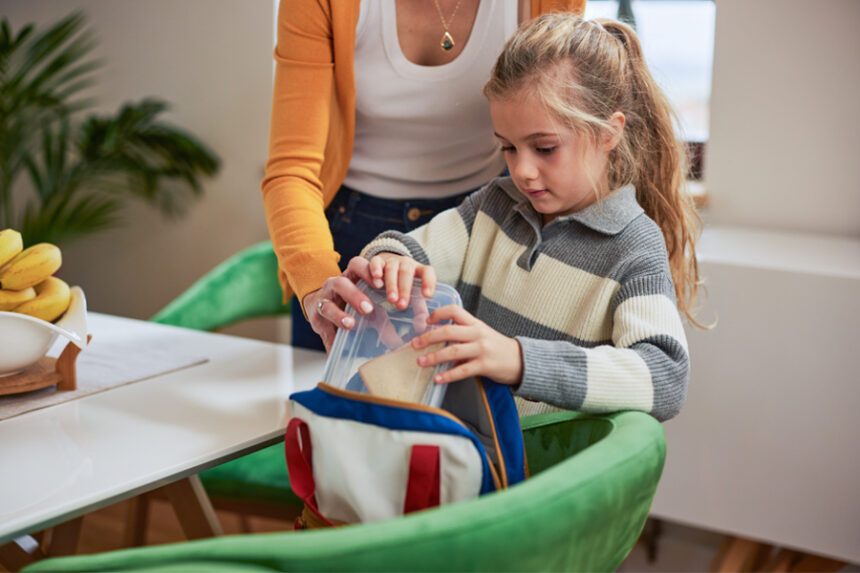
Kids are naturally curious and want to share with friends, so try to give your child a sense of ownership over their lunch.
“Do little things to make your child’s lunch special, or let your child help select what’s for lunch, because that can negate some curiosity about what other kids have,” Dr. Kim says.
It’s important to keep conversations with your child positive. If you tell a child they’ll have to have a shot of epinephrine if they eat something they’re not supposed to, they may not tell their teacher if they’re having symptoms because they’re worried they’ll get in trouble, or they may panic.
“Words and body language matter a lot, so be positive and try not to look scared,” Dr. Kim says. “Avoid scary words like ‘shot’ or ‘jab’ or framing this as life-or-death. Normalize this as medicine that will help them feel better if something happens.”
3. Ask your child’s teacher about food in the classroom.
Because so many children have food allergies, your child’s teacher likely has policies for birthdays, snack times and field trips.
“Peanut-free has been very normalized over the years, but milk and egg are harder to avoid,” Dr. Kim says. “Some schools have moved to no food-based activities, like no cupcakes for birthday parties. Others will do no homecooked treats, because the teacher needs a label to check for allergens.”
Some classrooms may not have these rules in place, and while you can ask for them, Dr. Kim says it’s important to be mindful about whether you’ll make your child stand out in a negative way or separate them from others.
“The protection that a peanut-free or milk-free table provides is actually really small compared to the real harm of stigmatizing the allergy,” Dr. Kim says.
If you’re in a school where there will be homemade treats, consider asking for advance notice instead.
“Provide the child with their own snack so they can still participate in an event,” Dr. Kim says. “I hate that it’s different for them, but I’m glad they’re participating and they’re not excluded.”
It’s frustrating if a classroom doesn’t have a policy that supports children with food allergies, but try to stay positive and collaborative with your child’s teacher.
“When you give the teacher grace and show understanding, that goes a long way,” Dr. Kim says. “When things are contentious and the parent and teacher don’t get along, the child suffers.”
4. Review food allergy information with your child every year.
Your child might be used to navigating their food allergy, but you’ll still want to review important information with them each year.
In middle and high school, kids might become newly concerned about being different.
“A lot of social activity, like dating and hanging out with friends, revolves around food,” Dr. Kim says. “It’s important to encourage that freedom, but these years might be when a kid with allergies takes chances to fit in.”
That can be especially true if they sailed through elementary school without any allergic reactions at school.
“They can be lulled into complacency, but you still need to avoid being scary about it,” Dr. Kim says. “There’s a window of time, around ages 9 to 12, when kids might start thinking about dying from a food allergy. That anxiety can be paralyzing. Empowerment and encouragement is important.”
Remind them of how much work they’ve done managing their allergy, and how it’s been possible to still enjoy activities with their friends. This kind of coaching will eventually help your child to live on their own.
“If your child has been in a bubble where you’ve always protected them, they won’t be confident to live outside the bubble,” Dr. Kim says. “We’ve noticed many college-aged kids who aren’t ready to live outside the bubble and be responsible for their own food.”
5. Ask your child’s doctor about options for treatment.
There is an easy and effective way to stop allergic reactions caused by food: epinephrine. But because epinephrine has traditionally been delivered via injection, people who are scared of needles have been wary to use it when needed.
“There’s been a very important change, and that’s the availability of non-needle epinephrine,” Dr. Kim says; in 2024, the Food and Drug Administration approved a nasal spray version of epinephrine (brand name Neffy). Talk to your doctor about whether this is a good option for your child; it can make treating a reaction much less stressful.
“It’s not that we can be loose with avoiding foods, but if there’s an incident where some food is shared, this is a way to make the symptoms go away without drama and pain,” Dr. Kim says.
You can also talk to your doctor about injections of omalizumab, which works to reduce or entirely prevent allergic symptoms in the case of accidental ingestion of a food. Injections have to be given every two to four weeks to be effective, but even short-term use might help a child make a transition.
“It can put a buffer around the transition so that your child has more confidence at school or living on their own,” Dr. Kim says. “They still have to do their best to be careful, but they’ll have some protection.”
Concerned about food allergies? Talk to your doctor or find one near you.