
An injury to the anterior cruciate ligament (ACL), a band of tissue in the knee that provides stabilization for the joint, is devastating to any athlete. A torn or ruptured ACL usually means surgery and about a year of rehabilitation before you can return to your sport.
“When someone has to remove themselves from their sport for that long, especially if sport is a major part of their identity, it’s a real challenge,” says UNC Health sports physical therapist Deidra Charity, PT, DPT. “There are physical, mental, social and financial consequences to these injuries.”
While ACL injuries can happen to anyone, particularly in sports that involve jumping and landing or switching directions quickly while running, they are about two to eight times more likely to happen to female athletes than male athletes.
“There are some reasons for this that we can control, like strength and motor control deficits impacting how an athlete changes direction or lands from jumping, and some that we can’t, like skeletal alignment,” says UNC Health sports physical therapist Catherine Duncan, PT, DPT.
Charity and Duncan explain how female athletes can reduce their risk for an ACL injury.
1. Incorporate more targeted strength training.
Female athletes don’t always train the muscles necessary to protect their knees.
“Women tend to be more dominant in their quads, muscles on the front of the thigh,” Charity says. “Hamstrings, on the back of the thigh, are also really important to protecting the knee.”
Core work is important for all athletes but is often neglected; female athletes also need to pay special attention to their hips.
“The hip muscles are really important for controlling what happens in the lower body,” Charity says. “When you run and pivot repeatedly, you need hip strength to help with dynamic stability and control.”
Ideally, a coach will build strength training into workouts in the preseason and during the regular season, but it’s important for athletes to work on their strength in the offseason, too.
“If an athlete does nothing during their offseason, they’ll be starting from the bottom when the season starts,” Duncan says. “It can take months to build up the necessary strength and endurance, and it’s very high-risk to go into a season unprepared, particularly in sports that involve quick changes in direction or physical contact.”
2. Practice risky movements with drills.
While you can have an ACL injury from direct contact, many of these injuries happen without direct contact as a result of the way an athlete moves. They may change direction suddenly and their knee is unable to stabilize quickly enough. Because women have a wider pelvis, they may land more stiffly or with their knees angled inward, which puts strain on the ACL.
That’s why it’s important for female athletes to have proper education on these movements and to drill them repeatedly.
“I teach athletes how to jump and land better, and how to run and cut more safely,” Duncan says. “Just as a baseball pitcher practices their pitch technique over and over, optimal cutting and landing techniques need to be incorporated into drills and be a part of regular training so that once you’re in a game or competition, they’ve become automatic. The athlete can think about strategy, not how their body moves.”
An athlete must multitask during a game or match—moving their body, watching for opponents, tracking a ball and more. That’s why Charity favors doing mental exercises during these drills, such as practicing movements while performing a cognitive task, such as adding numbers.
“We’re learning that the brain is probably more involved with these injuries than we previously thought,” Charity says. “The brain may be telling the muscles and joints where they are in space, but the body isn’t adapting as quickly.”
3. Get an individualized assessment from a physical therapist.
In a perfect world, a coach or a school’s athletic trainer would be able to quickly identify an athlete who is moving in a way that puts them at higher risk for injury. This doesn’t always happen, which is why it can be helpful to seek a consult with a sports physical therapist about injury prevention.
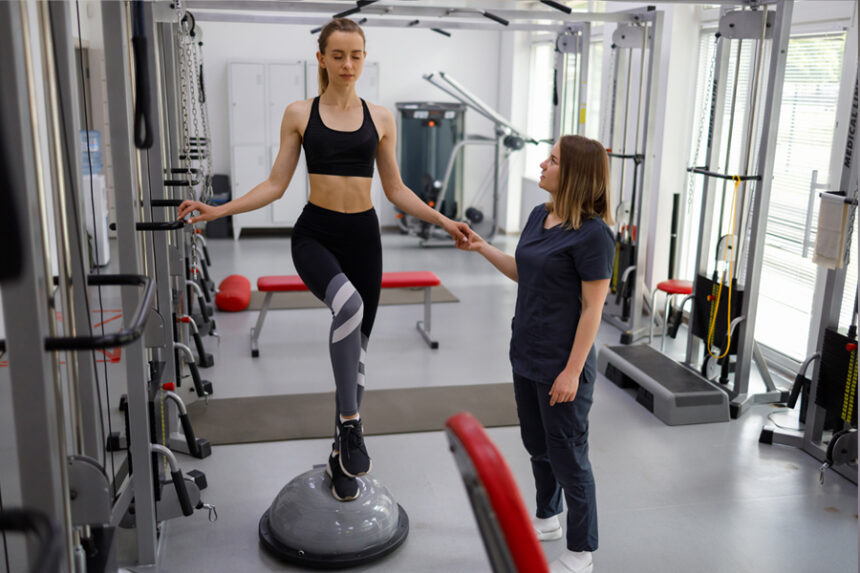
“A physical therapist can take an in-depth look at how a person moves,” Duncan says. “We evaluate strength and motor control and can recognize when additional training for injury prevention is needed.”
That additional training can be individualized for the specific demands of an athlete’s sport. Instead of a generic program—leg day twice a week, arm day twice a week—the athlete can follow a targeted plan designed by an expert.
4. Maintain overall health.
Addressing all aspects of health can help to prevent injuries.
“To reduce the risk of injury, it’s really important to look at the person as a whole,” Charity says. “Nutrition, sleep, mental health—all of those can influence performance on the field.”
Getting enough sleep can be difficult for young people trying to balance the demands of sports, school and a social life. Young athletes may also resist asking for a break when they’re mid-game, which is why coaches need to be alert to athletes who may need a substitute.
“Fatigue can make us sloppy in how we move,” Duncan says. “When you’re fatigued, it’s harder to recruit the muscle to help you change direction, so you’ll rely on the ACL, which can’t deal with the force you’re generating.”
As athletes increase their strength training or move more during a season, their nutritional needs will change. When an athlete doesn’t consume enough calories for their activity level, they’re at risk for a condition called relative energy deficiency in sport. Historically, this energy-deficient state has been called the female athlete triad, defined by menstrual dysfunction and low bone density in women, but it can affect any athlete.
5. Take breaks and avoid early specialization.
There’s a higher risk of injury when athletes play a sport year-round or participate in only one sport. The body doesn’t have a chance to recover and build different kinds of strength.
“Overuse injuries are a part of that, but when you don’t get exposure to other sports, the body doesn’t learn to adapt to the dynamic changes inherent in sports,” Charity says.
The American Academy of Pediatrics recommends waiting until young athletes are past puberty to specialize in one sport, but even then, playing multiple sports has value.
“When kids and adolescents play multiple sports, they develop different motor skills, which makes their body a more efficient machine,” Duncan says. “Moving your body in different ways throughout the year makes you a good athlete, rather than just good at one sport.”
Worried about sports injuries? Talk to your doctor, or find one near you.