
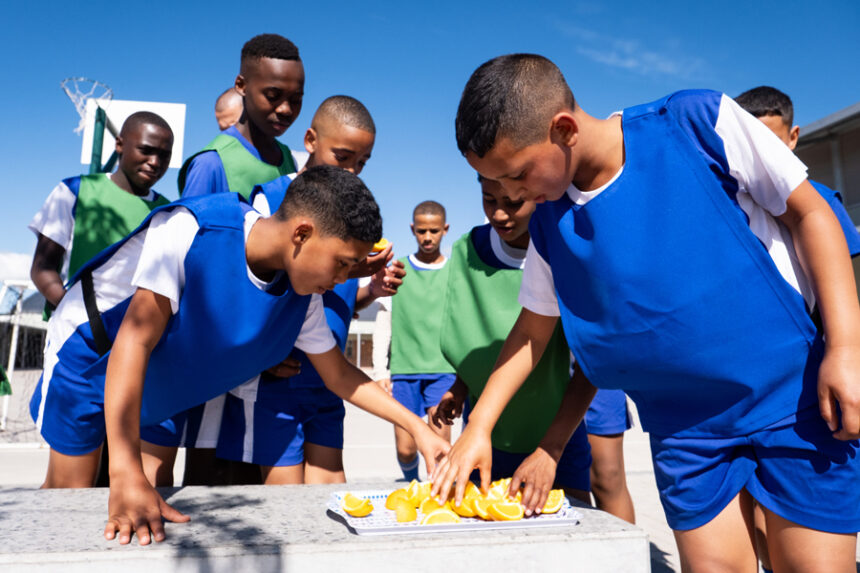
It’s exciting when your child finds a sport they love, and there are many benefits to playing youth sports.
“Playing a sport is good for physical health, including strength, coordination and balance, and it hopefully prepares them for lifelong physical activity,” says UNC Health family and sports medicine doctor Justin A. Lee, MD. “It’s also good for mental health, and with team sports, you get the benefit of learning to work with others and making friends.”
Whether your child is on their first team or a seasoned youth athlete, your job as a parent is to help them maintain healthy habits so they can play their best and avoid injury. Dr. Lee offers five ways parents can support student athletes—beyond cheering from the bleachers.
-
Work together with your child’s doctor.
When your child is playing school sports, it’s typically required that they get a sports physical.
“The vast majority of these are completely normal,” Dr. Lee says. “We’re checking to see that there’s not a health issue, like a cardiopulmonary condition, that’s been missed. We’re not looking to find a reason they can’t play.”
If your child does have a health condition, such as asthma, your child’s doctor can talk to them about managing it during physical activity. The doctor can provide guidance on preventing injury for a specific sport.
If your child becomes injured during the season, their physician will help determine when it’s safe to return to play.
“With a contact sport like football, there is going to be some pain,” Dr. Lee says. “I help athletes and their parents understand the difference between mild pain and a true injury that could affect the child’s ability to continue to play their sport.”
-
Encourage hydration and a healthy diet.
All kids need a nutritious, balanced diet, but that’s especially important for student athletes who are engaging in hours of physical activity nearly every day.
“Make sure they’re fueling their body properly,” Dr. Lee says. “Athletes need carbohydrates for fuel and protein for strength, as well as whole plant-based foods, like fruits and vegetables, for micronutrients such as vitamins, minerals and antioxidants.”
Everyone’s nutrient needs vary, so if you’re not sure that your child is getting the right foods during the season—maybe they’re always lacking energy, for example—talk to a sports nutritionist or dietitian. Consulting professionals is especially important if your child is engaging in a sport like wrestling, where they compete by weight class and may be trying to lose or gain weight.
For all athletes, hydration is critical, so be sure your student athlete always has their water bottle.
“It’s important to stay hydrated, especially when training is outside and it’s hot or humid,” Dr. Lee says.
-
Promote rest and sleep.
Your child’s ability to perform and play at their best, physically and mentally, depends on getting adequate sleep.
“When you’re training hard and playing sports, you have to give the body rest and let the muscles get adequate rest and recovery,” Dr. Lee says. “Sleep also affects the cognitive aspects of sport. It helps with concentration, accuracy, reaction times and making quick decisions.”
The National Sleep Foundation’s guidelines suggest that teens need about eight to 10 hours of sleep per night. That may seem especially difficult to a kid who is balancing schoolwork, sports, other extracurricular activities and friends, so talk to your child about prioritizing sleep. If they learn how to make time for restorative sleep now, it helps set them up for success in the future.
“They have to learn how to budget their time, so help them develop a schedule or routine, and then give them the space to learn how to do it on their own,” Dr. Lee says.
-
Keep the focus on fun, even with competitive sports.
As your child becomes older and more skilled at their sport, the competition increases. They may feel pressure to perform at a certain level from coaches, teammates and themselves. A poor performance can cause stress, sadness or anger.
“No matter how competitive, they still need to be enjoying it,” Dr. Lee says. “You do get to certain levels where doing your best individually or to help your team is important, but it should still be fun. It should not feel like a job.”
You don’t want to add to that pressure. Be mindful about how you talk to your child about their performance on the field. Focus on encouraging teamwork and camaraderie, and be sure your child knows that your love and support is not tied to their athletic achievements.
Sometimes, a change in attitude might be a sign that your child has lost interest in their sport, and they could be afraid to tell you because of your emotional and financial investment.
If your child’s mood, behavior, sleep or grades change, ask their doctor or a mental health professional for help.
-
Remember healthy habits year-round.
Maybe you’ve made it through another busy sports season, and your kid has a break. During their downtime, they should still be getting regular physical activity, eating well, hydrating and sleeping.
“It’s OK to take some time to recover, but it’s also important to stay in shape between seasons,” Dr. Lee says. “They should do some basic cardio, lift weights or cross-train, depending on the athlete. During the off-season, you train to increase strength and power, and that helps to prevent future injury.”
With fewer hours spent at practice, you might encourage a family bike ride or hike. And try to keep restful sleep and a nutritious diet top of mind.
“Being between seasons is not an excuse to eat a lot of fast food or stay up until 3 a.m. playing video games,” Dr. Lee says. “They should maintain their schedule and healthy lifestyle during the off-time.”
Questions about your child’s health? Talk to their doctor or find one near you.