
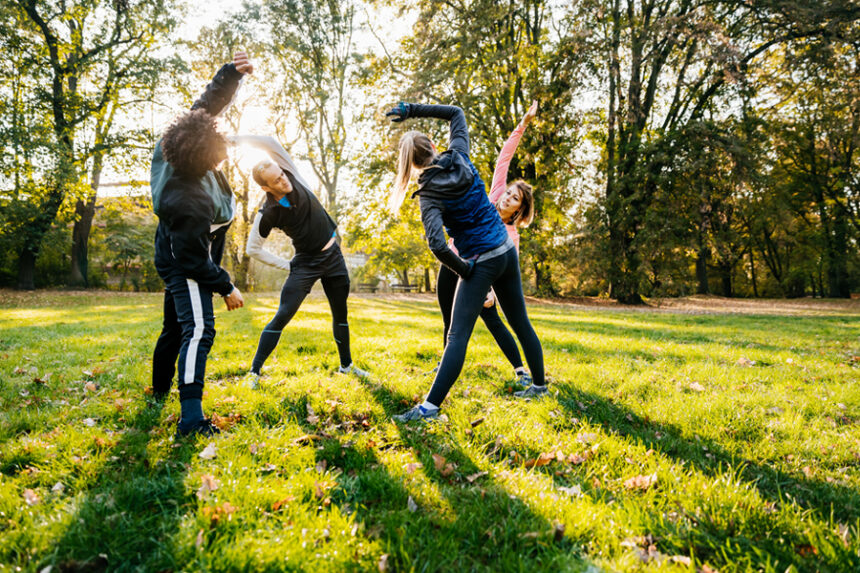
When you’re short on time at the gym or after your run, you might be tempted to skip stretching. But if you don’t have a consistent practice of full-body stretching to improve your flexibility, you’re missing out on a variety of benefits.
“Flexibility is one of the most important parts of your exercise program,” says UNC Health exercise physiologist and personal trainer Karla Dierks, MA. “It’s an integral part of fitness.”
Flexibility refers to your joints’ ability to move through a large range of motion without pain. We all have different flexibility; some people are naturally more flexible, thanks to genetics and body composition, but it’s something that everyone can lose as they age or if they’re not stretching regularly.
Dierks explains why flexibility is so important and how to improve yours.
Benefits of Flexibility
You might associate flexibility with dancers or gymnasts—athletes who can contort their limbs—but muscle and joint flexibility is important for anyone who moves their body, and it provides a powerful boost to cardio and strength workouts. Without flexibility, your muscles can get tight, affecting their ability to move properly and increasing your risk for injury.
“If you don’t have a full range of motion, you won’t get the maximum effect from a workout,” Dierks says. “It’s the most amazing training for sports. Even for young athletes, it helps with reaction time and balance.”
Flexibility helps after the workout, too. Stretching lubricates the joints by increasing blood flow and synovial fluid, the bones’ natural lubricant, while decreasing muscular waste products. That means faster recovery and less pain.
Flexibility also helps in your daily life, as you reach for items on a high shelf, bend over and walk.
“Flexibility means better functional movement during your everyday tasks, and it also helps with your posture and alignment,” Dierks says.
The process of stretching to improve your flexibility connects your body and your brain, which helps athletic performance because you’re more aware of how your body is moving, and it can help manage stress.
“Stretching gives you more awareness of your body and gives you the opportunity to get in touch with your breath, and some people really tend to lose touch with their breath as they move,” Dierks says. “That breathing moves more oxygenated blood through the body and is really great for your mood.”
How to Improve Flexibility
Dedicate a few minutes before and after every workout to flexibility, or find time most days to stretch, Dierks says.
“Before a workout, wake up your system by doing dynamic, rather than static stretches,” Dierks says; try arm swings, hip circles or a high-stepping march. “After the workout, end with static stretches.”
People often stretch one or two parts of their body—a hamstring or a shoulder, or whatever feels tight—but you should do a head-to-toe scan of your entire body and stretch each part on both the front and the back of the body. Paying attention to the back of the body is especially helpful if you’re spending a lot of time hunched over your laptop or phone.
If you need ideas for stretches for a certain part of the body, you could consult an online fitness resource, such as the American Council on Exercise’s Exercise Library, or talk to a personal trainer. A personal trainer can help you maintain your flexibility even if you’re dealing with an injury.
“The right stretches can really depend on the individual,” Dierks says. “Someone who is lifting heavy weights may need different stretches for their chest and shoulders than someone who isn’t.”
A beginner yoga class is also a good place to start stretching your body.
“Basic yoga can give you a snapshot of your total body flexibility,” Dierks says. “Even if you’re having mobility issues, chair yoga can help.”
Avoid common stretching mistakes, such as bouncing in a stretch (instead, hold in stillness for 30 seconds to a minute), pushing a stretch so that you feel pain and holding your breath.
“There is a balance of finding your stopping point, so that you keep pain out of the picture,” Dierks says. “Slow down, breathe and listen to your body. Your body will tell you if the stretch is right, and that guidance from within is important.”
Talk to your doctor before beginning a new exercise program. If you need a doctor, find one near you.