
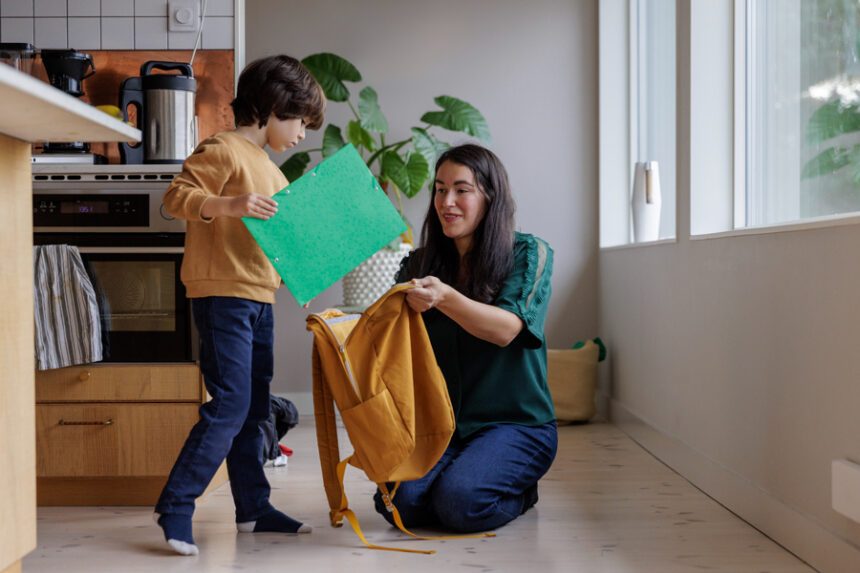
A new school year is a busy time for families. But while you’re ticking items off supply lists and going to meet-the-teacher events, remember this is also a good time to think about your child’s overall health.
UNC Health pediatrician Tarshree Sawyer-Knox, MD, MPH, provides some tips on setting your favorite students up for success.
-
Visit your child’s pediatrician, dentist and eye doctor.
Your child’s school may require forms from your doctor before school or sports start, but even if they don’t, the beginning of a school year is a great time for children to see all of their doctors.
“In those yearly check-ups, we can make sure everything is on track with their growth and if they need any vaccines,” Dr. Sawyer-Knox says. “We can check in on any issues they may be having with attention, learning or mood.”
Not being able to see or hear can affect your child’s ability to learn in the classroom, so their doctor may recommend additional testing with an ophthalmologist or audiologist. If your child wears glasses, they should have a visit to make sure their prescription is still accurate. Be sure your child is on track with their dental visits, too—healthy teeth are important for growth and development.
-
Set up a school-year routine.
If routines and rules were relaxed this summer, it’s time to get back to business.
“I recommend starting a week or two before school starts to get your child’s consistent bedtime back in place,” Dr. Sawyer-Knox says. “Make sure they’re starting off their day well with a good breakfast. Being hungry during the day hinders learning.”
If school has already started, you still have time to finetune some of your child’s routines. After school is an important time.
“Have a consistent routine where the child comes home and has a quiet, well-lit space for schoolwork,” Dr. Sawyer-Knox says. “Set expectations so the child learns that this is part of what they do when they come home, and when homework is done they can do other things.”
If your child is in extracurricular activities, consider whether the time and energy commitment is manageable or if it’s time to prioritize some activities over others.
-
Talk about your family’s media use.
Screen time can creep up during the summer, but during the school year, too many videos or computer games can distract from schoolwork and sleep.
“Screens are really simulating, especially in the hour before sleep, when kids need to be winding down,” Dr. Sawyer-Knox says. “Reading or talking with family members is better for helping them rest. Try to turn off screens at least an hour before bedtime.”
Rather than setting a specific time limit on screens, Dr. Sawyer-Knox recommends that families create a personalized media plan using a tool provided by the American Academy of Pediatrics.
“It’s customizable and helps each family set the boundaries that are right for them,” Dr. Sawyer-Knox says, noting that it allows parents and kids to discuss screen-free zones (like the dinner table), activities to do as a family and what types of content are appropriate.
-
Do a backpack check.
Whether your child got a new backpack or is using an old favorite, check how heavy it is once it has books and needed supplies inside.
“If a backpack is too heavy, it starts to cause back pain, neck pain and other posture issues,” Dr. Sawyer-Knox says. “Ideally, the backpack will have padded straps and the weight doesn’t exceed 10 percent of the child’s body weight.”
That means a 60-pound child should only be carrying a backpack that’s 6 pounds when full. Talk to your child about packing tips: Put the heaviest things closest to the child’s back, and use all the compartments to distribute weight evenly.
Don’t let the backpack become a black hole of papers and supplies.
“Make sure it’s being cleaned out regularly, so they’re only carrying what they need,” Dr. Sawyer-Knox says.
One thing that should go in your child’s backpack: A water bottle.
“Encourage your child to have regular sips of water throughout the school day, not just at lunchtime,” Dr. Sawyer-Knox says. “If they’re playing sports, they need more.”
-
Review bus and car safety.
Back-to-school time means an increase of cars on the road in the morning. Talk to your child about staying safe around vehicles, no matter how they get to school. If your child walks, review the basics about crossing streets at designated crosswalks and looking both ways before crossing.
If your child travels by car, make sure your whole family knows the school rules about where and how to pick up and drop off students, and be sure your child knows not to cut in front or behind other cars to get to yours.
“If your child rides the bus, try to arrive early to the bus stop, because we can make bad decisions when we rush,” Dr. Sawyer-Knox says. “Make sure your child waits for the bus in a safe spot, back from the curb, and only approaches the bus when it completely stops and the driver has seen them.”
-
Encourage healthy habits.
Healthy habits such as eating balanced meals, regular physical activity and quality sleep will help your child feel their best and set them up to learn. As your child grows and gains more independence, they’ll start making some of those choices on their own, but your encouragement can help.
If your child is navigating a school cafeteria on their own for the first time, “encourage them to make sure they’re getting some vegetables and fruit at every meal,” Dr. Sawyer-Knox says. “It’s also important to try to limit juice and other sugary drinks.”
While your child may move their body during gym or recess, it’s still important to encourage physical activity at home.
“I recommend at least 60 minutes of activity a day, when they can go outside and play and get their heart rate up,” Dr. Sawyer-Knox says.
Make sure your kids are not sacrificing sleep for studying; most kids in elementary and middle school need nine to 12 hours of sleep to be well-rested, while teens need eight to 10 hours.
-
Check in on their emotions and provide support.
You may have one child who loves school, one who can’t stand it and another who gets stressed about every test. No matter how your child feels about another school year, make sure you’re regularly checking in on how they’re doing.
“It’s good to talk about the goal of school and frame it in a way that helps children understand why they go,” Dr. Sawyer-Knox says. “The goal of school is to learn, so focus on that process rather than just outcomes like grades.”
If you see that your child is worried or starting to struggle, see if they need additional support. You can help with homework or find a tutor if needed.
Some back-to-school nerves are normal at the beginning of the year, but if it’s been a few weeks and your child hasn’t settled into their routine, talk to their doctor. They can help determine if your child may need additional screening for a learning issue or an emotional concern, and they’ll have resources to help make this school year successful for your family.
If you have questions about your child’s health, talk to their doctor or find one near you.